
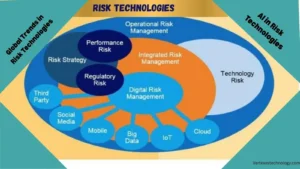
Uncertainty stalks every business move like a shadow at noon. One wrong step can ripple into chaos. However, Risk Technologies turn guesswork into calculated foresight. They sift signals from noise, flag hidden threats, and guide choices. Think of them as a digital compass during a storm, steady and precise.
Risk Technologies: Empowering Resilience in a Complex World
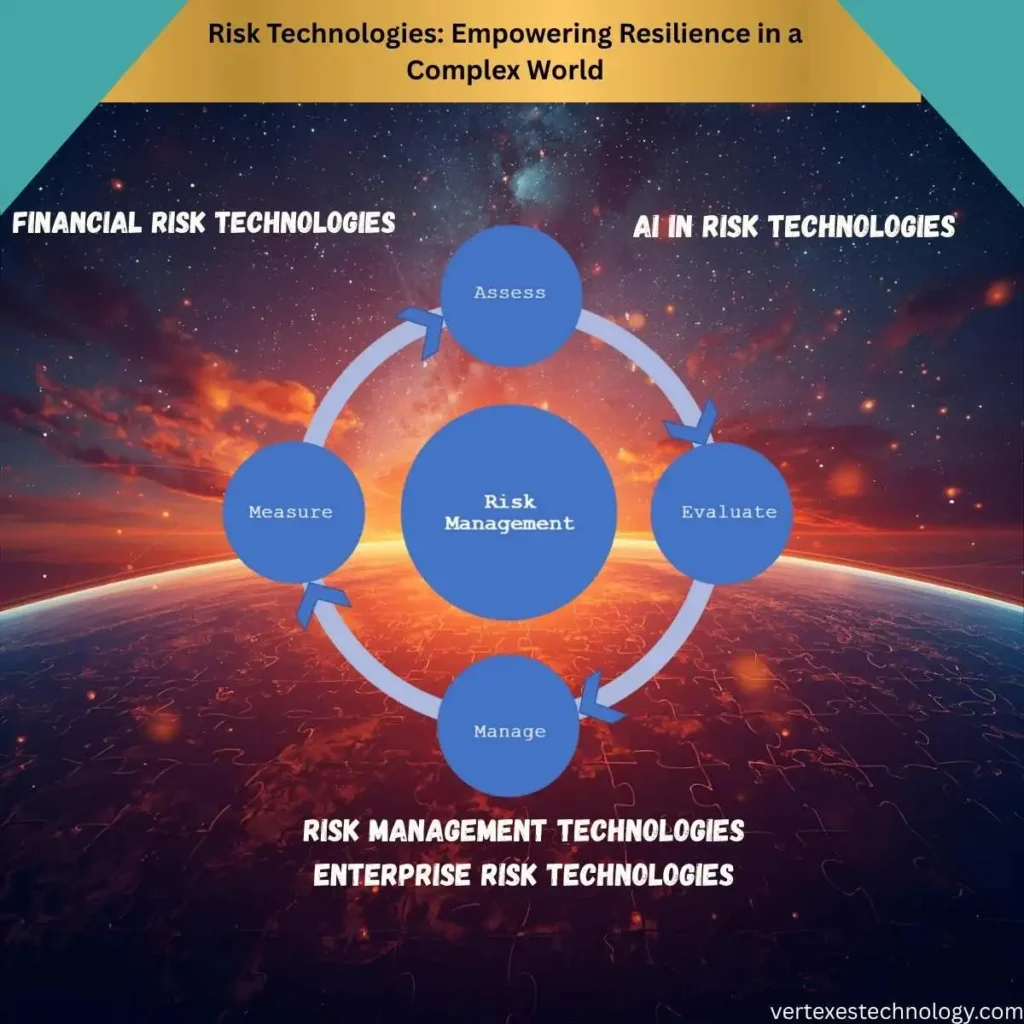
Organisations face a wide range of challenges in a world that is becoming more unstable, from supply chain interruptions and cyberattacks to environmental risks and regulatory changes. Traditional risk management techniques are no longer adequate when these hazards change. Risk technologies are useful in this situation. These cutting-edge tools and frameworks enable companies to more accurately and quickly anticipate, evaluate, and reduce risks.
|RELATED: tgarchivegaming tech
What Are Risk Technologies?
Digital platforms, systems, and techniques intended to detect, track, and control different forms of organisational risk are referred to as riskTech. These technologies, in contrast to conventional risk assessments, use automation, artificial intelligence (AI), and data analytics to provide real-time insights and predictive capabilities. As a result, they facilitate more resilient operations and quicker decision-making.
Core Components of Modern Risk Technologies
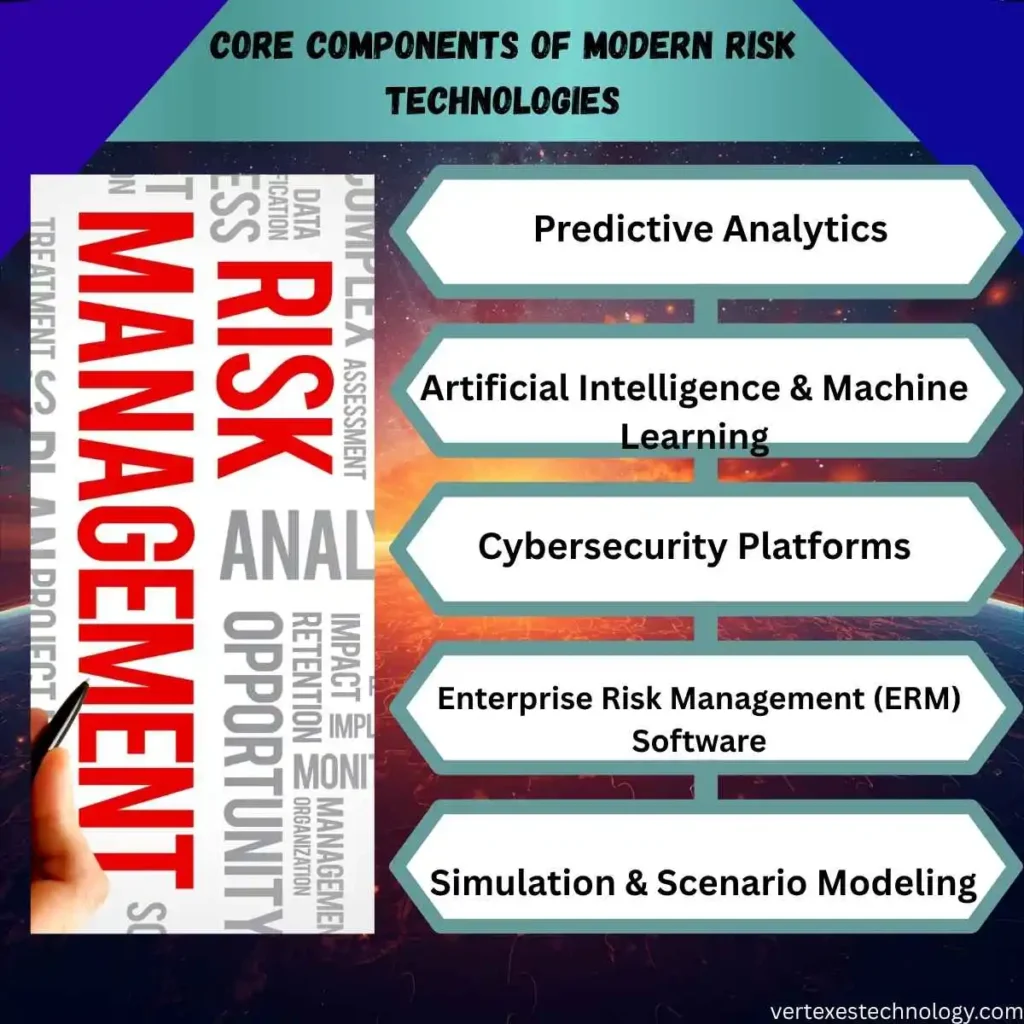
Here are the key pillars that define today’s most effective risk technology solutions:
1.Predictive Analytics
By analyzing historical and real-time data, predictive models forecast potential risks before they materialize. For example, financial institutions use these tools to detect fraud patterns and credit defaults.
2. Artificial Intelligence & Machine Learning
AI algorithms can identify anomalies, automate risk scoring, and adapt to emerging threats. Moreover, machine learning continuously improves accuracy by learning from new data inputs.
3. Cybersecurity Platforms
With cyber threats on the rise, integrated security solutions monitor networks, detect breaches, and automate incident responses. As a result, organizations can reduce downtime and protect sensitive data.
4. Enterprise Risk Management (ERM) Software
ERM platforms centralize risk data, streamline compliance, and align risk strategies with business objectives. In many cases, they also support regulatory reporting and audit readiness.
5. Simulation & Scenario Modeling
Tools like Monte Carlo simulations and digital twins allow companies to test risk scenarios and prepare contingency plans. This proactive approach enhances crisis preparedness and resource allocation.
Benefits of Implementing Risk Technologies
| Feature | Benefit |
|---|---|
| Real-Time Monitoring | Enables immediate detection and response to threats |
| Data-Driven Decision-Making | Improves accuracy and reduces human error |
| Regulatory Compliance | Simplifies audits and ensures adherence to industry standards |
| Operational Resilience | Enhances business continuity and disaster recovery |
| Cost Efficiency | Minimizes losses and optimizes risk-related investments |
How Does Risk Technologies Work?
Behind the curtain, Risk Technologies operates like a vigilant sentinel. It collects data from multiple sources, processes it using machine learning algorithms, and flags anomalies. Then it delivers actionable insights. For instance, a system might detect unusual login activity and trigger alerts instantly.
Key Features of Risk Technologies
Modern Risk Technologies platforms come packed with intelligent tools that simplify complex risk landscapes. They do not just observe. They act.
- Real-time data monitoring systems
- Predictive AI risk models
- Automated compliance tracking
- Integrated cybersecurity frameworks
- Cloud-based scalability for enterprises
These features allow companies to stay nimble even in volatile environments.
Benefits of Risk Technologies
The payoff feels immediate. Risk Technologies transforms reactive chaos into proactive control.
- Enhances decision-making using predictive analytics
- Reduces financial losses through early detection
- Improves operational efficiency with automation
- Strengthens data protection strategies
For example, an e-commerce firm can stop fraudulent transactions before payment clears. That is like locking the door before the thief even knocks.
Real-World Applications of Risk Technologies
Across industries, Risk Technologies proves its versatility like a Swiss Army knife.
- Finance: Fraud detection and credit risk scoring
- Healthcare: Patient data protection and compliance
- Manufacturing: Equipment failure prediction
- Retail: Inventory risk optimization
For instance, airlines use predictive systems to prevent mechanical failures. A small alert today can prevent a massive disaster tomorrow.
Advantages and Disadvantages
Every rose has its thorns. Risk Technologies offers powerful advantages, yet some challenges linger.
| Advantages | Disadvantages |
|---|---|
| Fast decision-making | High implementation cost |
| Accurate predictions | Requires skilled staff |
| Enhanced automation tools | Data privacy concerns |
| Scalable systems | Integration complexity |
However, most drawbacks fade as technology matures and expertise grows.
Is Risk Technologies Safe and Secure?
Security stands at the heart of Risk Technologies. Advanced systems use encryption protocols, multi-factor authentication, and AI-driven threat detection. However, no system is bulletproof. Regular updates, penetration testing, and secure coding practices keep vulnerabilities at bay.
Risk Technologies vs Traditional Risk Management
Traditional methods feel like navigating with a paper map. Meanwhile, Risk Technologies acts like GPS with live updates.
| Feature | Risk Technologies | Traditional Methods |
|---|---|---|
| Speed | Real-time | Delayed |
| Accuracy | High with AI | Human-dependent |
| Automation | Extensive | Limited |
| Scalability | Cloud-enabled | Rigid |
Clearly, modern systems outperform older approaches in both speed and precision.
Future of Risk Technologies
The horizon looks promising and slightly thrilling. Risk Technologies will evolve with AI innovation, quantum computing, and smarter automation. For example, predictive models may soon anticipate risks before they even form patterns. It feels like reading tomorrow’s newspaper today.
Common Problems and Solutions
Even powerful tools stumble sometimes. Risk Technologies faces issues that require thoughtful handling.
- Data overload → Use smart filtering algorithms
- False positives → Improve machine learning training
- Integration issues → Adopt flexible APIs
- Skill gaps → Invest in training programs
However, consistent refinement keeps systems sharp and reliable
FAQs
Q1: What are risk technologies exactly?
A: They’re technological tools and platforms an organisation uses to identify, measure and manage risks. This ranges from dashboards and analytics to machine-learning models.
Q2: Is “RiskTech” the same as “riskTech”?
A: Essentially yes—but RiskTech is more a shorthand or brand term, often used in fintech and regulatory-tech circles. “Risk technologies” is more descriptive and plain-English.
Q3: Can you use both “riskTech” and “risk technologies” interchangeably?
A: Although related, they imply slightly different scopes. “Risk technology” suggests a single system or approach; “riskTech” suggests multiple tools. Choose based on context and clarify.
Q4: Which term is more professional in a report?
A: ““risk management in technology” (plural) is a safe choice for professional reports because it avoids jargon and suggests breadth.
Q5: Are there spelling differences between UK and US for this term?
A: No major spelling differences exist for “risk technologies”. The words themselves are the same. The variation is mainly in style rather than spelling.
Q6: What common mistakes should I avoid when using the term?
A: Avoid mixing singular/plural inconsistently, over-capitalizing without reason, failing to define the term, or hyphenating unnecessarily.
Q7: Where do I place the term in a sentence?
A: Use it naturally: e.g., “Our team is evaluating new “risk management in technology to improve monitoring of cyber-exposure.” Keep it lower-case unless you’re using it as a defined term or brand.
Conclusion
To sum up: “risk technologies” is a clear, professional term that covers the many tools, systems and platforms used to manage organisational risk. If you’re writing for an international audience, stick with the plural form, define it on first use, and keep your style consistent. Use “RiskTech” only if you’re writing in a fintech or startup context where the term is understood and you’ve explained it. Avoid singular-plural confusion, unnecessary hyphens, and inconsistent capitalisation. By doing so, you’ll meet reader intent: giving a quick answer, offering detailed explanation, and providing professional guidance. Whether you’re drafting a white-paper, blog post, or internal memo, you’ll be equipped to use “riskTech” with clarity and confidence.