
Ethical technology moves fast. Ethics often moves slower.
This gap raises an urgent question: Who decides what technology should do?
Modern innovation shapes healthcare, finance, education, and security. AI systems guide decisions. Automation manages factories. Software stores massive personal data. Yet powerful tools can cause harm if used without responsibility.
Ethical technology aims to solve this problem. It places human values at the center of innovation. Engineers, companies, and governments now explore ways to design technology that respects privacy, fairness, and safety.
As the digital world expands, ethical technology becomes more than a theory. It becomes a necessity for responsible progress.
RELATED: Technology and humanity
What is Ethical Technology?
Ethical technology refers to designing and using digital systems in ways that respect human rights, fairness, privacy, and social responsibility.
This concept focuses on responsible innovation across industries. Developers build software and hardware systems that consider their social impact. Companies evaluate how AI algorithms influence real people.
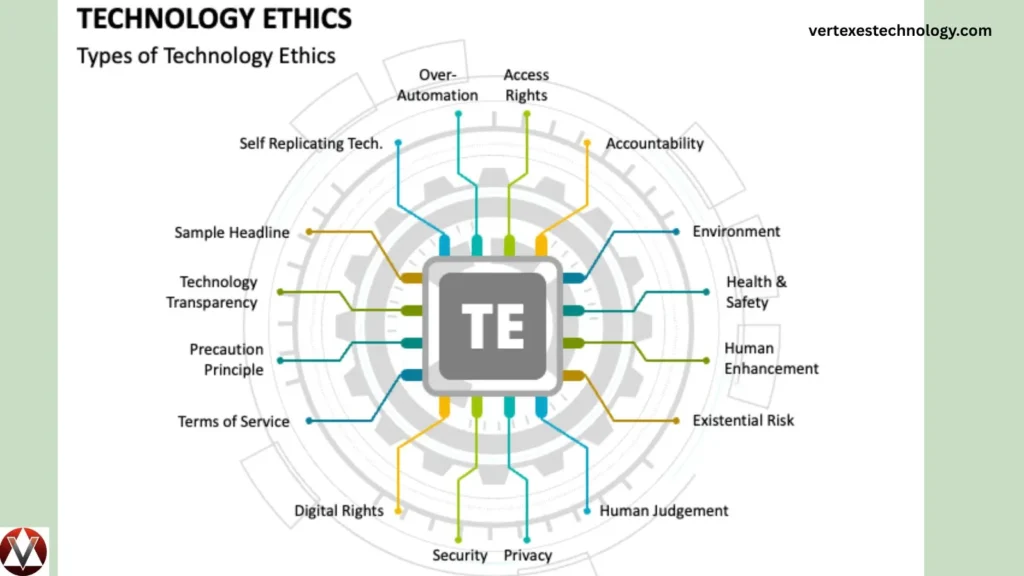
Ethical technology promotes several guiding principles:
- Transparency in algorithms
- Fairness in automated decisions
- Privacy protection for user data
- Accountability in technology design
- Security against digital threats
Technology influences almost every part of life. Ethicals technology ensures that innovation benefits society rather than harming it.
How Does Ethical Technology Work?
Ethical technology works by integrating ethical guidelines into the design and development process. Engineers, policymakers, and researchers collaborate to set responsible standards.
Core Processes Behind Ethical Technology
1. Ethical Design Principles
Developers define values before building software systems. These include fairness, safety, and transparency.
2. AI Bias Testing
Machine learning models undergo testing to identify bias or discrimination.
3. Data Privacy Controls
Systems protect user data using encryption and strict access management.
4. Cybersecurity Safeguards
Security protocols prevent unauthorized access and protect digital infrastructure.
5. Continuous Monitoring
Organizations review technology performance to detect ethicals risks.
Through these steps, ethicals technology balances innovation with responsibility.
Key Features of Ethical Technology
Ethicals technology includes several important characteristics that guide responsible development.
1. Transparency
Systems explain how decisions are made. Users understand the logic behind AI algorithms.
2. Accountability
Developers remain responsible for the outcomes of technology systems.
3. Privacy Protection
Secure data practices protect personal information.
4. Fairness
AI models avoid bias across gender, race, or economic groups.
5. Secure Infrastructure
Cybersecurity frameworks defend systems from digital attacks.
6. Sustainable Innovation
Energy-efficient hardware and responsible manufacturing support environmental goals.
These features allow industries to innovate while maintaining ethical standards.
Benefits of Ethical Technology
Ethicals technology provides significant advantages for businesses, governments, and individuals.
Stronger User Trust
Transparent systems build confidence among users and customers.
Better Regulatory Compliance
Organizations avoid legal issues by following ethical standards.
Reduced Algorithm Bias
Fair AI systems produce more accurate and equitable outcomes.
Improved Cybersecurity
Ethical design includes security from the start of development.
Long-Term Innovation
Responsible technology creates sustainable progress.
Companies that prioritize ethicals technology often gain a competitive advantage. Customers prefer brands that respect privacy and fairness.
Real-World Applications of Ethicals Technology
Ethical technology already influences many industries.
Healthcare
- AI-assisted diagnosis with bias monitoring
- Secure electronic health record systems
- Patient data privacy protection
Finance
- Fraud detection systems using ethical AI models
- Transparent credit scoring algorithms
- Secure digital payment infrastructure
Education
- Fair automated grading systems
- AI tutoring platforms that avoid bias
Smart Cities
- Privacy-respecting surveillance systems
- Secure traffic automation tools
E-commerce
- Transparent recommendation algorithms
- Ethical use of customer behavior data
These examples show how Technological ethics shapes real-world digital systems.
Advantages and Disadvantages of Ethicals technology
Technological ethics offers many benefits, but it also presents challenges.
Advantages of Ethicals technology
- Encourages responsible innovation
- Builds public trust in technology
- Reduces risk of AI bias
- Improves cybersecurity practices
- Supports long-term digital sustainability
Disadvantages of Ethically technology
- Higher development costs
- Slower product release cycles
- Complex ethical decision-making
- Lack of global standards
Comparison Table Technological ethics
| Aspect | Advantages | Disadvantages |
|---|---|---|
| AI Systems | Fairer decisions | Extra testing required |
| Cybersecurity | Strong protection | Higher cost |
| Software Development | Transparent systems | Longer development time |
| Innovation | Responsible growth | Regulatory complexity |
Balanced implementation helps organizations manage these challenges effectively.
Is Ethical Technology Safe and Secure?
Technology that is ethicals focuses heavily on safety and security. However, strong technical systems are essential to support ethical standards.
Technical Security Measures
Encryption
Sensitive data remains protected through advanced encryption protocols.
Secure Software Architecture
Developers design software using secure coding practices.
AI Monitoring Systems of Ethical technology
Machine learning tools detect abnormal behavior or system misuse.
Zero-Trust Cybersecurity Models
Every system request requires verification before access is granted.
Blockchain-Based Verification
Decentralized records improve transparency and prevent data manipulation.
These technical safeguards strengthen ethical technology by reducing risks related to privacy and security.
Ethical Technology vs Traditional Technology
| Feature | Ethical Technology | Traditional Technology |
|---|---|---|
| Design Approach | Human-centered | Performance-focused |
| AI Decision Making | Transparent and monitored | Often opaque |
| Data Privacy | Strong protections | Limited controls |
| Security | Built-in cybersecurity | Added later |
| Social Impact | Carefully evaluated | Often overlooked |
Traditional technology focuses primarily on functionality. Technological ethics adds responsibility and accountability to the innovation process.
Future of Ethical Technology
The future of ethical technology looks promising. Governments, technology companies, and research institutions increasingly support responsible innovation.
Key developments may include:
- Global ethical AI regulations
- Stronger data protection frameworks
- Ethical auditing tools for algorithms
- AI governance platforms for organizations
- Responsible automation systems
Common Problems and Solutions of Ethical Technology
Problem 1: AI Bias
Algorithms sometimes reflect biases in training data.
Solution: Use diverse datasets and regular fairness testing.
Problem 2: Data Privacy Risks
Large datasets create privacy challenges.
Solution: Implement encryption and strict data governance policies.
Problem 3: Lack of Transparency
Users may not understand how algorithms work.
Solution: Develop explainable AI systems.
Problem 4: Weak Cybersecurity
Poor security can expose sensitive data.
Solution: Adopt layered cybersecurity strategies.
Problem 5: Regulatory Uncertainty
Different countries apply different technology laws.
Solution: Follow international ethical standards and compliance frameworks.
Proactive strategies help organizations address these challenges effectively.
FAQs
1. What is ethics technology?
Ethicals technology means designing and using technology in ways that respect privacy, fairness, security, and human rights.
2. What are the 5 types of technology?
Information technology, medical technology, communication technology, construction technology, and transportation technology.
|See also: Technology impact on society
3. What is an example of ethical technology use?
Using AI systems that protect user data and avoid bias in decisions such as hiring or healthcare diagnosis.
4. What are the 4 principles of ethics?
Autonomy (respect choices), beneficence (do good), non-maleficence (avoid harm), and justice (be fair).
5. Why is ethicals technology important?
It protects user privacy, prevents misuse of data, and ensures technology benefits society responsibly.
6. What are the five ethical issues in tech?
Privacy violations, data security risks, AI bias, digital surveillance, and misuse of personal information.
7. What are the 7 types of technology?
Information, communication, medical, industrial, agricultural, transportation, and environmental technology.
8. What is the top 10 technology?
Artificial Intelligence, Blockchain, Cloud Computing, Internet of Things, Cybersecurity, Robotics, 5G, Quantum Computing, AR/VR, and Automation.
Final Verdict of Ethical technology
Ethical technology represents a vital shift in how the world approaches digital innovation. Technology now shapes nearly every industry, from healthcare to global finance. Without ethical oversight, powerful systems could cause unintended harm.
By integrating fairness, transparency, cybersecurity, and accountability into software and hardware design, ethical technology protects both users and society. Responsible innovation builds trust, encourages sustainable growth, and reduces technological risks.
The future of technology will not only depend on how powerful systems become. It will depend on how responsibly they are built and used. Ethical technology ensures that innovation serves humanity rather than controlling it.