
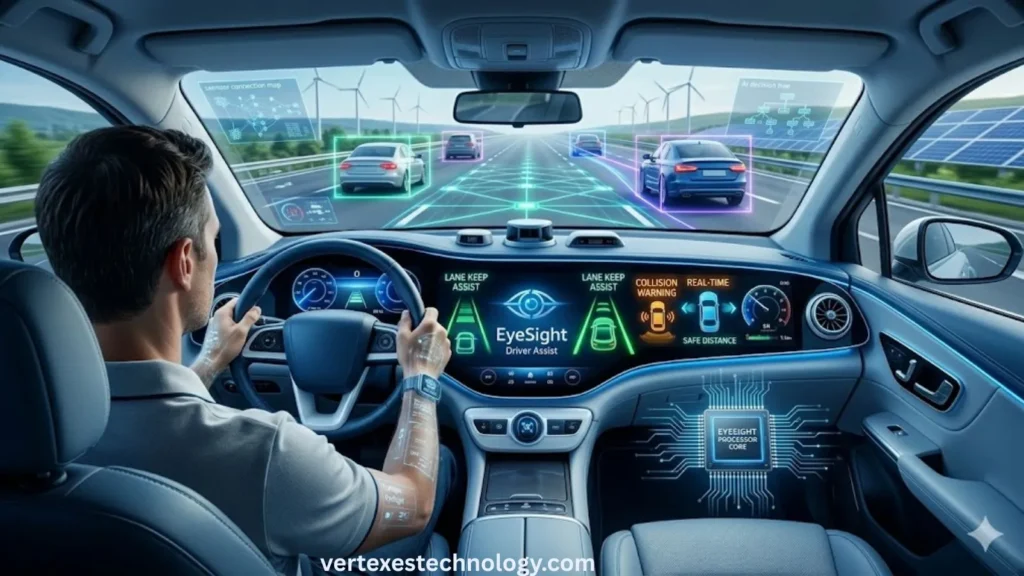
Roads can change in a blink. One second feels calm, and the next brings sudden braking. That is where Eyesight Driver Assist Technology steps in. It acts like a second pair of eyes, helping drivers stay alert. Meanwhile, this smart system blends AI, sensors, and fast decisions to reduce risk.
|RELATED: Aqua Technologies: Smart Solutions for Modern Tech
What is Eyesight Driver Assist Technology?
Eyesight Driver Assist Technology is an advanced safety system found in many modern cars. It uses cameras and smart software to monitor traffic, lanes, and obstacles. As a result, it warns drivers or steps in when danger appears. Think of it as a quiet co-pilot.
This system often comes in vehicles from Subaru, though similar tools exist elsewhere. However, each brand adds its own twist using hardware and digital upgrades.
How Does Eyesight Driver Assist Technology Work?
The system uses stereo cameras mounted near the windshield. These cameras scan the road like human eyes. They judge distance, speed, and movement in real time. Meanwhile, onboard automation tools process the data quickly.
If a car ahead slows suddenly, the system can warn the driver. In some cases, it also applies brakes. It may also help steer gently inside lane markings.
Key Features of Eyesight Driver Assist Technology
Many drivers like this system because it offers practical help every day. Common features include:
- Pre-collision braking
- Adaptive cruise control
- Lane departure warning
- Lane keep assist
- Lead vehicle start alert
- Reverse automatic braking
Each feature relies on smart technology and precise sensors. Therefore, driving feels calmer and more controlled.
Benefits of Eyesight Driver Assist Technology
This system brings peace of mind on busy roads. It supports drivers without taking full control. That balance matters.
Main Benefits
- Reduces rear-end collision risk
- Helps during long highway trips
- Lowers driver fatigue
- Improves reaction time
- Encourages safer habits
Meanwhile, newer versions use better innovation and sharper image detection. That means stronger performance in daily traffic.
Real-World Applications of Eyesight Driver Assist Technology
Drivers use this system in cities, suburbs, and highways. For example, adaptive cruise control shines during traffic jams. It adjusts speed smoothly without constant pedal work.
Lane assist helps on long motorway trips. Reverse braking also helps in parking lots. Therefore, it works where stress often lives. Even skilled drivers appreciate an extra safety net.
Advantages and Disadvantages
| Advantages | Disadvantages |
|---|---|
| Helps avoid collisions | May raise vehicle cost |
| Reduces stress on highways | Cameras need clean glass |
| Smart cruise control | Performance may drop in bad weather |
| Supports lane control | Drivers may rely too much |
| Improves resale value | Repairs can cost more |
Like any tool, it works best when used wisely.
Is Eyesight Driver Assist Technology Safe and Secure?
Yes, Eyesight Drivers Assist Technology is generally safe when used properly. It adds layers of protection through cameras, alerts, and braking support. However, it does not replace driver attention.
From a digital angle, these systems also need strong cybersecurity. Carmakers now build safer networks to reduce hacking risks. Still, keeping vehicle software updated remains smart practice.
Eyesight Drivers Assist Technology vs Standard Cruise Control
| Feature | Eyesight Driver Assist Technology | Standard Cruise Control |
|---|---|---|
| Keeps set speed | Yes | Yes |
| Adjusts to traffic | Yes | No |
| Emergency braking | Yes | No |
| Lane support | Yes | No |
| Camera sensors | Yes | No |
Standard cruise control is simple. However, Eyesight offers far more brains and flexibility.
Future of Eyesight Driver Assist Technology
The future looks bright. New versions may use stronger AI, faster chips, and wider sensors. That means quicker reactions and better object recognition.
Meanwhile, systems may connect with smart roads and cloud data. Cars could warn each other about danger ahead. Step by step, roads may become safer for everyone.
Common Problems and Solutions
Dirty Windshield Cameras
Dust or rain can block cameras. Clean the windshield carefully and remove ice before driving.
Warning Lights Stay On
Sometimes sensors need recalibration. Visit a service center for checks.
Poor Performance in Heavy Weather
Fog or snow may limit visibility. Drive manually and reduce speed.
System Turns Off
Battery issues or sensor faults may cause shutdowns. A technician can inspect the hardware.
FAQs
Does Eyesight Driver Assist Technology drive the car itself?
No, it only assists the driver.
Can it brake automatically?
Yes, in some emergency situations.
Does it work at night?
Yes, but results vary by conditions.
Is it useful in traffic jams?
Yes, adaptive cruise control helps a lot.
Can rain affect it?
Yes, heavy rain may reduce camera accuracy.
Does it need maintenance?
Yes, keep sensors clean and software updated.
Is it worth the cost?
For many drivers, yes because safety adds value.
Final Verdict
Eyesight Drivers Assist Technology offers a smart mix of comfort and safety. It watches traffic, supports braking, and eases long drives. However, it still needs an alert human behind the wheel. Used correctly, it becomes a trusted travel partner rather than a replacement driver. As technology evolves, these systems will likely grow sharper, safer, and more common on roads worldwide.