
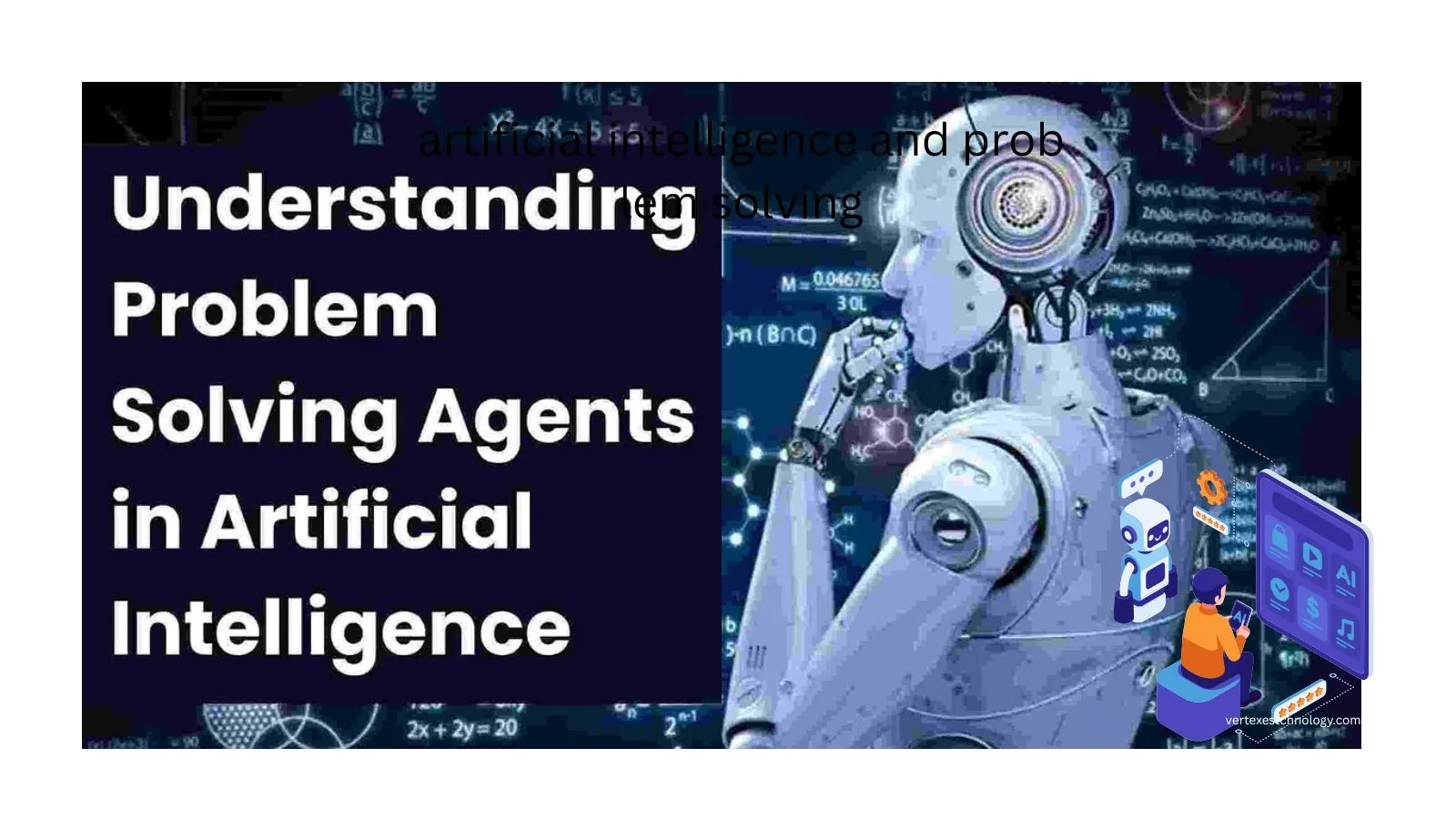
Artificial Intelligence (AI) and problem solving are transforming the way humans think, decide, and act. In today’s fast-paced world, people search for this topic to understand how AI systems can process data, learn from patterns, and make decisions that once required human intelligence. The confusion often arises from distinguishing between simple automation and true AI-based reasoning. While automation follows predefined steps, AI learns, adapts, and improves over time — much like a human brain trained to solve challenges.
AI problem solving involves using algorithms, logic, and data-driven insights to find solutions faster and more accurately. For instance, AI helps doctors detect diseases early, engineers design smarter systems, and businesses predict customer needs. Whether it’s identifying fraud, planning routes for delivery, or writing human-like text, AI turns complex problems into manageable tasks.
Understanding artificial intelligence and problem solving is essential in a world driven by data and innovation. It empowers individuals and industries to harness technology not just for efficiency, but for creativity and smarter decision-making.
Artificial Intelligence and Problem Solving Examples
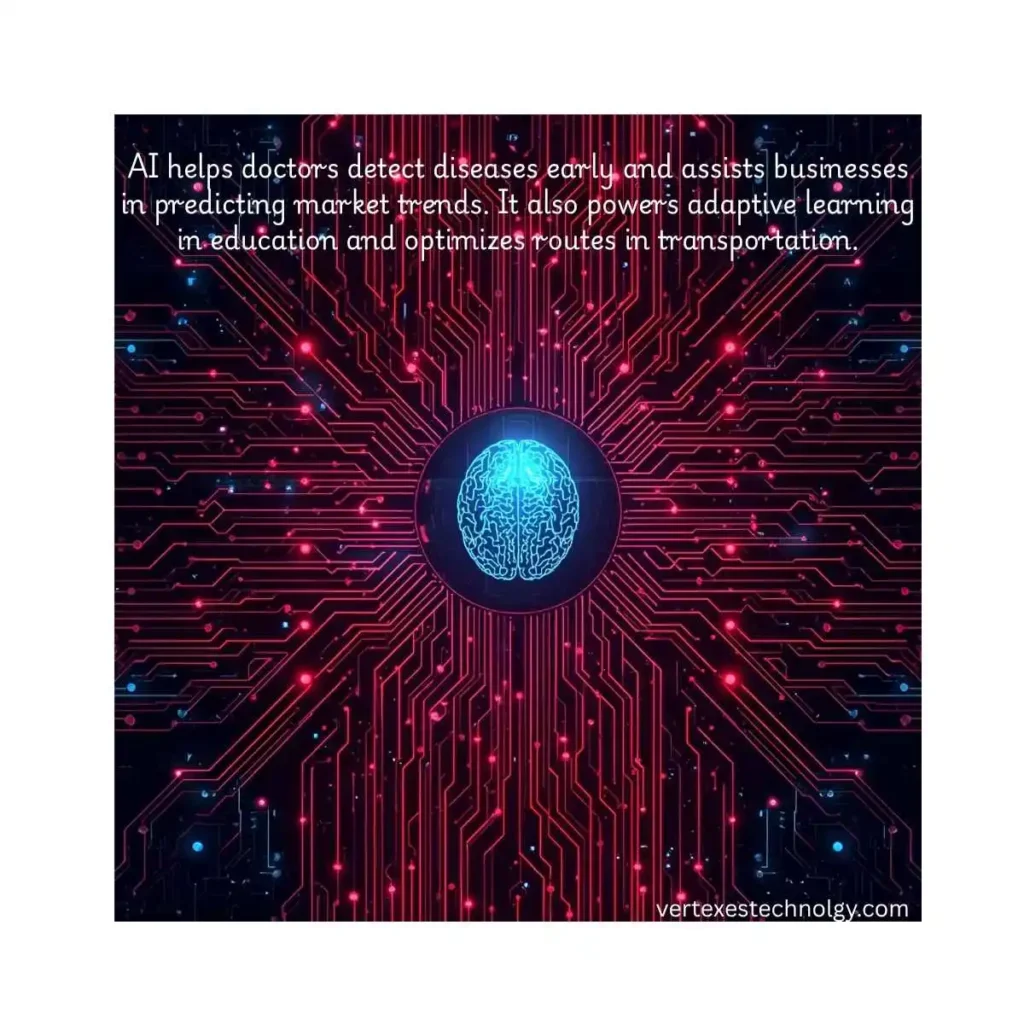
Artificial intelligence (AI) is reshaping industries by solving complex problems with speed and precision. In healthcare, AI analyzes medical images to detect cancers or predict patient risks early. In finance, AI systems identify fraud and forecast stock market trends. Manufacturing uses AI for predictive maintenance and quality control, while education benefits from adaptive learning platforms that tailor lessons to each student’s needs. In transportation, AI powers self-driving vehicles and optimizes delivery routes. Even customer service uses AI chatbots to answer queries instantly. These examples show how AI enhances decision-making, reduces human error, and increases overall efficiency across diverse sectors.
Artificial Intelligence and Problem Solving in Education
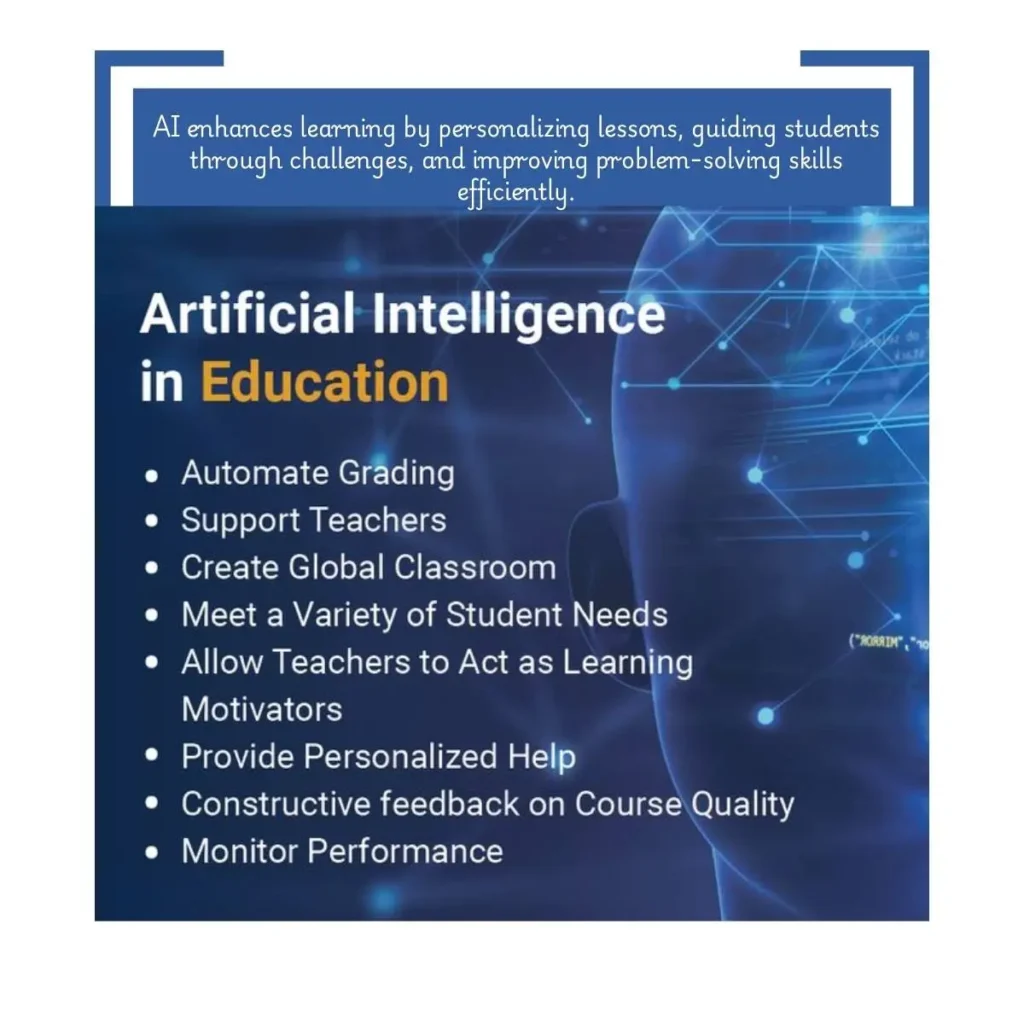
Artificial intelligence is revolutionizing education by enhancing how students learn and how teachers teach. AI systems can analyze student performance data to identify strengths, weaknesses, and learning gaps. Adaptive learning platforms then provide personalized lessons, exercises, and feedback tailored to each student’s needs. For teachers, AI automates administrative tasks such as grading, attendance tracking, and curriculum planning, allowing more time for interactive teaching. AI also powers intelligent tutoring systems that simulate one-on-one guidance, helping students solve complex problems step by step. By integrating AI, education becomes more efficient, engaging, and accessible, preparing students with critical problem-solving skills for the modern world.
Relationship Between Artificial Intelligence and Problem Solving in Education
Artificial intelligence enhances problem solving in education by analyzing student data, identifying learning gaps, and offering personalized solutions. AI-driven tools guide students through complex tasks, provide instant feedback, and support critical thinking. This relationship empowers both teachers and learners to address challenges efficiently and improve overall learning outcomes.
Artificial Intelligence and Problem Solving: A Professional Perspective
In the digital age, the ability to solve problems efficiently is a cornerstone of innovation and progress. As industries become more complex and data-driven, traditional problem-solving methods often fall short. This is where artificial intelligence (AI) steps in, offering a transformative approach to tackling challenges with speed, accuracy, and adaptability.
Understanding AI as a Problem-Solving Tool
At its core, artificial intelligence refers to the simulation of human intelligence by machines. Unlike conventional software that follows predefined rules, AI systems are designed to learn from data, adapt to new inputs, and make decisions with minimal human intervention. Consequently, AI is not just a tool—it’s a dynamic problem solver capable of handling uncertainty, complexity, and scale.
AI approaches problem solving through several key techniques:
- Search algorithms: These help AI explore possible solutions systematically, especially in scenarios like route planning or game strategy.
- Knowledge representation: AI systems structure information in a way that allows them to reason logically and draw conclusions.
- Machine learning: By analyzing patterns in data, AI can predict outcomes and optimize decisions over time.
Real-World Applications of AI in Problem Solving
Across industries, AI is being used to address a wide range of challenges. For instance, in healthcare, AI algorithms assist in diagnosing diseases by analyzing medical images and patient records. In finance, AI models detect fraudulent transactions by identifying anomalies in spending behavior. Furthermore, in logistics, AI optimizes delivery routes, reducing fuel consumption and improving efficiency.
Moreover, AI-powered chatbots and virtual assistants are revolutionizing customer service by resolving queries in real time. These systems not only reduce operational costs but also enhance user satisfaction through 24/7 availability and personalized responses.
Transitioning from Human to Hybrid Intelligence
While AI excels at processing vast amounts of data and identifying patterns, it doesn’t replace human intuition or ethical judgment. Instead, the most effective problem-solving models are hybrid systems, where AI supports human decision-makers. For example, in legal research, AI can quickly scan thousands of documents, but lawyers still interpret the findings within a legal framework.
Additionally, as AI continues to evolve, it is increasingly being integrated into strategic planning and innovation processes. Businesses now use AI to simulate market scenarios, forecast trends, and test product designs—tasks that were once time-consuming and speculative.
Challenges and Considerations
Despite its potential, AI-driven problem solving is not without challenges. Data quality, algorithmic bias, and lack of transparency can hinder outcomes. Therefore, organizations must implement ethical AI practices, ensure diverse data representation, and maintain human oversight.
Furthermore, the success of AI depends on continuous learning and adaptation. As environments change, AI systems must be retrained and updated to remain effective. This requires a commitment to ongoing evaluation and refinement.
Artificial Intelligence and Problem Solving – Quick Answer
Artificial Intelligence (AI) helps solve problems by simulating human thinking. It analyses data, recognizes patterns, and makes decisions faster than humans. For example, AI in healthcare detects early signs of disease, while AI in finance predicts market shifts. Machine learning, deep learning, and neural networks are core techniques that allow AI systems to adapt and improve over time.
The Origin of Artificial Intelligence and Problem Solving
The term Artificial Intelligence was coined in 1956 by John McCarthy at Dartmouth College. It refers to machines that can perform tasks requiring human intelligence. Problem solving, a concept rooted in psychology and logic, dates back to early studies on human reasoning. Together, these ideas evolved with computing — from simple rule-based systems to self-learning algorithms. Today, AI problem-solving represents the fusion of logic, computation, and creativity.
British English vs American English Spelling
While the concept of AI and problem solving is global, spelling and phrasing can vary slightly between British and American English. For instance:
| Concept | British English | American English |
|---|---|---|
| Optimisation | Optimisation | Optimization |
| Analysing | Analysing | Analyzing |
| Behaviour | Behaviour | Behavior |
| Programme (software) | Programme | Program |
| Modelling | Modelling | Modeling |
Both versions convey the same meaning, but American English tends to simplify spelling by removing extra vowels or consonants.
Which Spelling Should You Use?
If your audience is in the United States, use American spelling like “analyzing” and “optimization.” For readers in the UK, Australia, or Commonwealth countries, stick with British spelling such as “analysing” and “optimisation.” For global or academic audiences, consistency is key — choose one style and use it throughout your writing.
Common Mistakes with Artificial Intelligence and Problem Solving
- Confusing AI with automation: Automation follows fixed rules; AI learns and adapts.
- Overestimating AI’s abilities: AI can analyze data but doesn’t understand context like humans.
- Ignoring data quality: Poor input data leads to inaccurate results.
- Mixing AI terms: Terms like “machine learning” and “AI” are related but not identical.
- Assuming AI replaces humans: In reality, AI augments human decision-making.
Artificial Intelligence and Problem Solving in Everyday Examples
AI-driven problem solving appears everywhere:
- Emails: Smart replies in Gmail predict your response.
- News: AI curates personalized feeds based on reading habits.
- Social Media: Algorithms recommend content that matches user interests.
- Formal Writing: Grammar tools like Grammarly detect tone and suggest better phrasing.
- Healthcare: AI assists doctors in reading medical scans and detecting diseases early.
These examples show how AI improves efficiency, accuracy, and personalisation in daily tasks.
Artificial Intelligence and Problem Solving – Google Trends & Usage Data
According to recent Google Trends data, “Artificial Intelligence and Problem Solving” shows the highest search interest in the United States, India, and the United Kingdom. Interest peaks during major AI breakthroughs or global tech events.
| Country | Interest Level | Common Contexts |
|---|---|---|
| United States | High | AI startups, research, and education |
| India | Very High | Job skills, machine learning applications |
| United Kingdom | Medium | Ethical AI, government use |
| Canada | Moderate | Academic research |
| Australia | Moderate | Business automation |
The data shows that interest in AI problem-solving continues to grow globally, especially in education and technology sectors.
FAQs about Artificial Intelligence and Problem Solving
1. What is Artificial Intelligence in simple terms?
AI is when computers mimic human intelligence to learn, reason, and make decisions.
2. How does AI solve problems?
AI uses data analysis, pattern recognition, and predictive algorithms to find efficient solutions.
3. What are real-world examples of AI problem solving?
Self-driving cars, medical diagnosis systems, and voice assistants like Siri or Alexa.
4. Can AI think like humans?
AI can simulate human thought but lacks consciousness or emotions.
5. What are the challenges of AI in problem solving?
Bias in data, ethical concerns, and high computational costs.
6. Is AI problem solving used in education?
Yes. AI personalizes learning, tracks student progress, and provides instant feedback.
7. Will AI replace human problem solvers?
No. AI supports humans by handling repetitive or data-heavy tasks while humans focus on creativity and judgment.
Conclusion
Artificial Intelligence and problem solving are transforming the modern world. From healthcare and education to business and transportation, AI systems are reshaping how we think, plan, and decide. While AI offers speed and precision, humans still provide creativity, ethics, and empathy. Understanding how AI solves problems helps us use it wisely — to enhance, not replace, human intelligence. The future lies in collaboration between human insight and artificial power to solve complex global challenges.