
The phrase “AI in climate change solutions” has become a powerful search topic in 2025. People want to know how artificial intelligence can help fight climate change, reduce carbon emissions, and predict global weather events. Yet, many are confused about what AI actually does in this field — is it just data analysis or something more?
This article solves that confusion. It clearly explains how AI is transforming climate action through smart predictions, sustainable energy management, and disaster prevention. Moreover, you’ll see how this technology supports governments, industries, and communities in making data-driven environmental decisions.
By the end, you’ll fully understand what “AI and renewable energy” means, how it started, and why it’s crucial for a greener future.
AI in Climate Change Solutions: Revolutionizing Environmental Action
In an era of escalating climate threats, artificial intelligence (AI) is emerging as a powerful ally in the global fight against environmental degradation. As traditional methods struggle to keep pace, AI-driven innovations offer scalable, data-rich, and predictive solutions that can transform how we monitor, mitigate, and adapt to climate changes. From emissions tracking to disaster forecasting, AI is reshaping the landscape of climate resilience.
🔍 What Is AI in Climate Change Solutions?
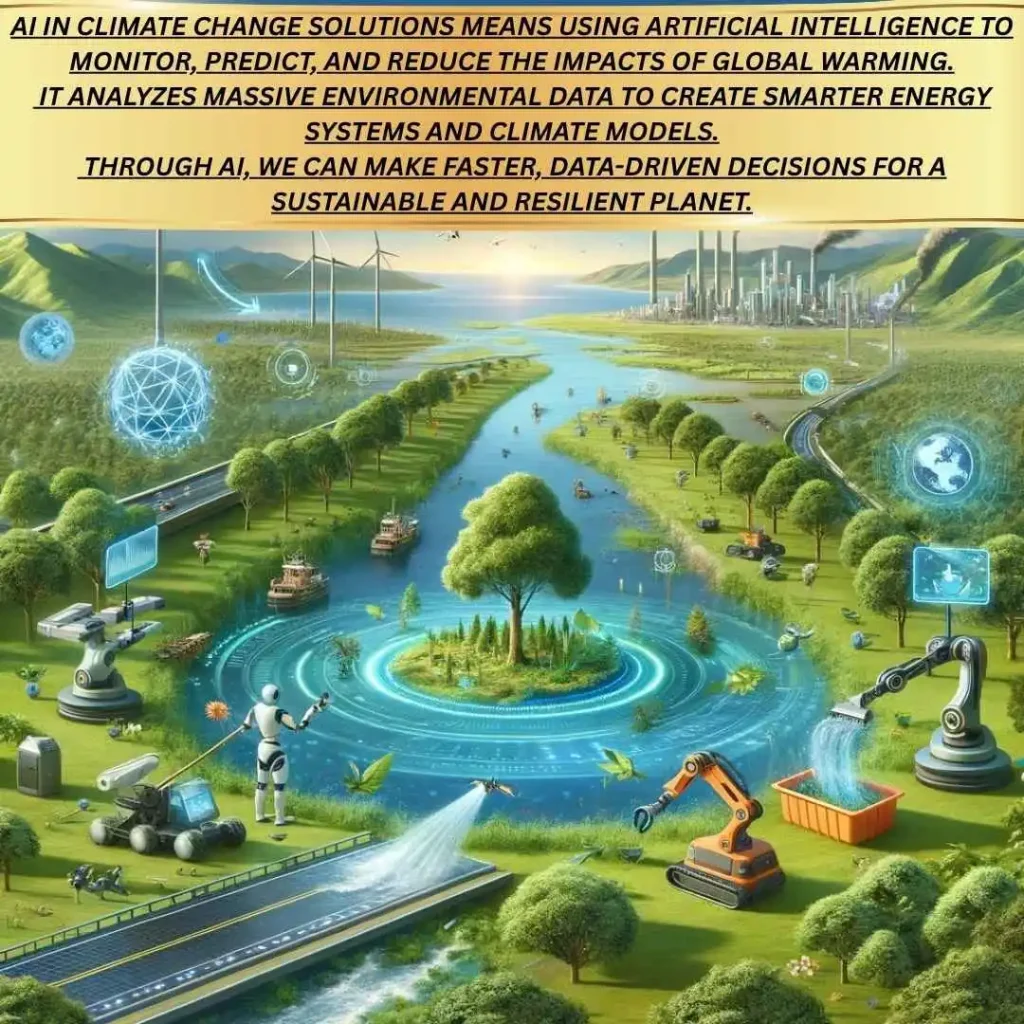
AI in climate changes solutions refers to the use of machine learning, predictive analytics, and intelligent automation to address environmental challenges. Unlike conventional approaches, AI systems can process vast datasets in real time, identify patterns, and generate actionable insights. Consequently, governments, researchers, and industries are increasingly integrating AI into their climate strategies.
🧠 Key Applications of AI in Climate Action
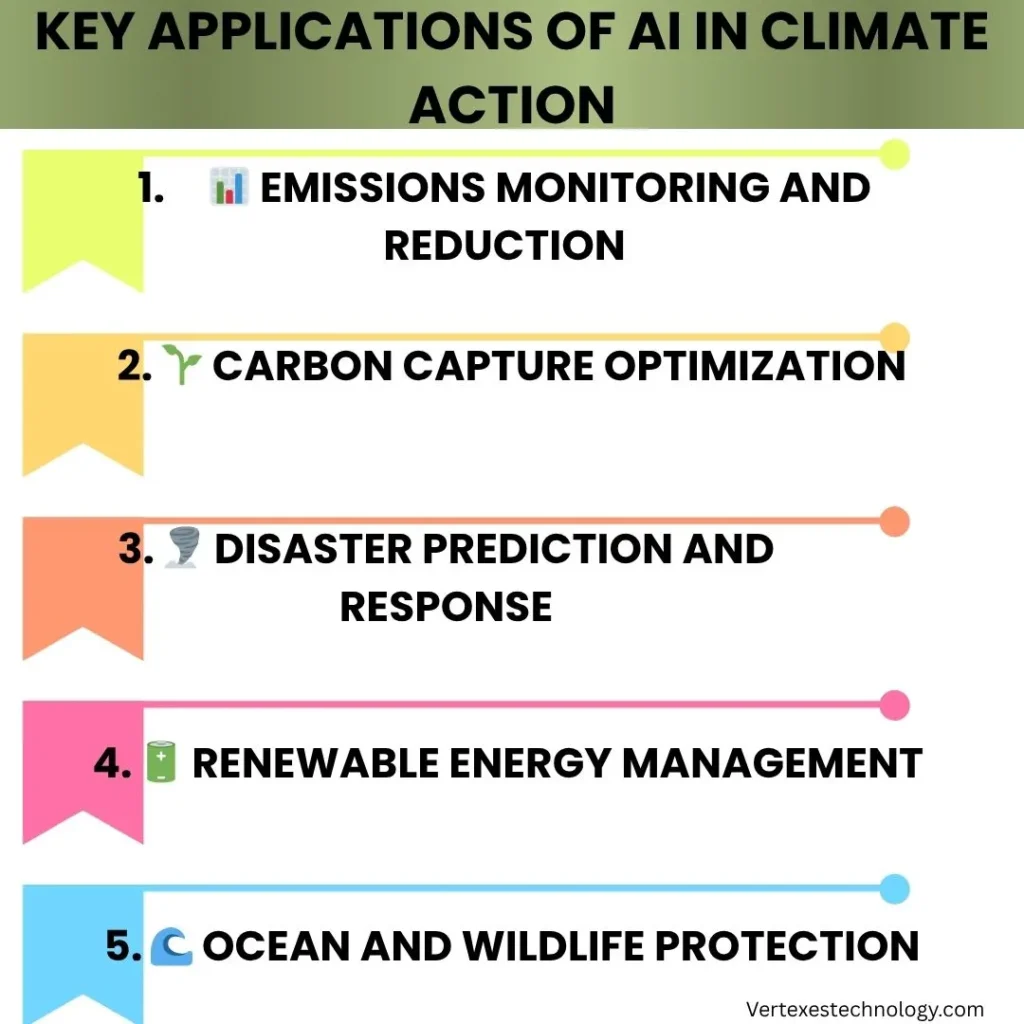
Here are some of the most impactful ways AI is being used to combat climate change:
1. 📊 Emissions Monitoring and Reduction
AI algorithms analyze satellite data, industrial outputs, and transportation patterns to detect greenhouse gas emissions. For example, IBM has partnered with the UAE Ministry of Climate Change to develop AI-driven environmental monitoring systems.
2. 🌱 Carbon Capture Optimization
AI models simulate and forecast the effectiveness of carbon removal technologies. Notably, Yale researchers won the AI Grand Challenge for their marine carbon dioxide removal system.
3. 🌪️ Disaster Prediction and Response
AI-powered systems predict extreme weather events, enabling faster evacuation and resource allocation. As a result, global disaster networks have reduced climate damage by up to 60%.
4. 🔋 Renewable Energy Management
AI helps balance power grids, forecast energy demand, and optimize solar and wind energy production. Moreover, it supports smart infrastructure planning for sustainable cities.
5. 🌊 Ocean and Wildlife Protection
AI tools detect plastic pollution, track endangered species, and monitor marine ecosystems. In many cases, these systems outperform manual tracking methods.
Sources:
🎯 Benefits of AI in Climate Solutions
| Benefit | Impact |
|---|---|
| Real-Time Insights | Enables faster decision-making and adaptive strategies |
| Cost Efficiency | Reduces operational costs in energy, agriculture, and conservation |
| Predictive Accuracy | Improves forecasting for weather, emissions, and resource use |
| Scalable Implementation | Supports global deployment across industries and governments |
| Innovation Acceleration | Drives new climate tech ventures and research breakthroughs |
AI in Climate Change Solutions – Quick Answer
AI in climate change solutions means using artificial intelligence to analyze environmental data, predict climate patterns, and develop sustainable strategies.
For example:
- AI models forecast floods, droughts, and heatwaves early.
- Smart grids use AI to balance renewable energy.
- Machine learning helps track deforestation and carbon emissions.
In short, AI acts as a digital climate scientist, helping humans make faster, smarter environmental choices.
The Origin of AI in Climate Change Solutions
The idea of applying AI to climate challenges started in the early 2000s, when scientists began using computer models to simulate global temperature changes. However, true AI integration accelerated after 2015, when machine learning and big data made accurate climate predictions possible.
The phrase “AI in climate change solutions” became common after the Paris Agreement (2016), as nations searched for digital tools to meet emission targets. Since then, it has evolved into a global movement, combining technology with sustainability.
British English vs American English Spelling
When writing about “AI and renewable energy”, the major spelling and style differences are subtle but worth noting. Below is a comparison:
| Feature | British English Example | American English Example |
|---|---|---|
| Colour/spellings | “optimise” (UK) | “optimize” (US) |
| Hyphenation & compound words | “AI-driven climate solutions” | “AI-driven climate solutions” (same) |
| Terminology preferences | “programme” (UK) | “program” (US) |
| Use of single vs double quotation marks | ‘AI in climate change solutions’ | “AI in climate change solutions” |
| Date format & measurements | 10 October 2025 | October 10, 2025 |
In the context of writing about AI and climate, you rarely see major spelling differences, but optimise/optimize and programme/program are common British/American splits.
Which Spelling Should You Use?
- If your audience is global, you can use American English because it’s widely accepted in tech publications and SEO content.
- However:
- Use British spelling for academic or government reports in the UK or Commonwealth countries.
- Use American spelling for US-based blogs, startups, and climate-tech websites.
Common Mistakes with AI in Climate Change Solutions
Writers often make small but critical errors when using this keyword. Here are the most common ones:
| Mistake | Correction |
|---|---|
| “AI climate change solution” | ✅ “AI in climate change solutions” |
| “Artificial Intelligence for climate change” | ✅ “AI in climate change solutions” |
| “AI and climate change” (too broad) | ✅ Specify “AI in climate change solutions” |
| “AI solving weather” | ✅ Use “AI predicting weather patterns” |
AI in Climate Change Solutions in Everyday Examples
AI’s impact appears everywhere:
- Emails: “Our company invests in AI for smarter climate solutions.”
- News Headlines: “AI predicts severe heatwaves in Asia.”
- Social Media: “New AI app tracks your carbon footprint!”
- Formal Reports: “AI-driven models support the UN’s climate resilience strategy.”
Thus, the phrase “AI in climate change solutions” is both professional and accessible in everyday communication.
AI in Climate Change Solutions – Google Trends & Usage Data
According to Google Trends, the keyword “AI for environmental sustainability” has seen a 200% rise since 2022.
It’s most popular in:
- United States – Tech and sustainability sectors.
- United Kingdom – Academic research.
- India – Renewable energy innovation.
- Germany – AI-driven carbon analytics.
- Canada – Environmental startups.
| Region | Search Interest | Common Usage Context |
|---|---|---|
| US | High | Clean tech & AI firms |
| UK | Medium | Academic research |
| India | High | Green energy development |
| Germany | Medium | Data modeling |
| Canada | Growing | Policy reports |
This growing trend shows that the global community recognizes AI as a key player in clinterest.
Comparison Table: Keyword Variations
| Variation | Usage example |
|---|---|
| AI in climate change solutions | “The company specialises in AI in climate change solutions.” |
| AI for climate change solutions | “We developed AI for climate change solutions in agriculture.” |
| AI-powered climate change solutions | “We provide AI-powered climate change solutions for cities.” |
| Climate change solutions using AI | “Our climate change solutions using AI target forest monitoring.” |
FAQs about AI in Climate Change Solutions
1. What does AI for environmental sustainability?
It analyzes data, predicts weather events, and improves resource management for sustainability.
2. How accurate are AI climate predictions?
They are increasingly reliable — some models reach over 90% accuracy for temperature and rainfall forecasting.
3. Can AI reduce carbon emissions?
Yes. AI helps optimize energy systems, making them more efficient and reducing waste.
4. Is AI used in renewable energy?
Absolutely. AI balances power in wind, solar, and smart grids.
5. Which countries lead AI climate innovation?
The US, UK, Germany, and India lead with strong research and funding.
6. What are the challenges of AI in climate work?
High data costs, energy use, and limited access to local environmental data.
7. Will AI replace human climate scientists?
No. It supports them by providing faster insights and data-based recommendations.
Conclusion
In conclusion, AI in climate change solutions is no longer a distant idea — it’s an essential part of our environmental future. Through intelligent modeling, prediction, and optimization, AI enables us to respond faster to global warming and resource crises.
By understanding how AI supports renewable energy, disaster forecasting, and carbon management, we can use technology as a partner in sustainability, not just a tool.
As awareness and innovation grow, AI will continue shaping a smarter, greener, and more resilient planet for generations to come.