
5G is the fifth gen5G Enabled Smart Cities: Transforming Urban Life with Faster and Smarter Technology
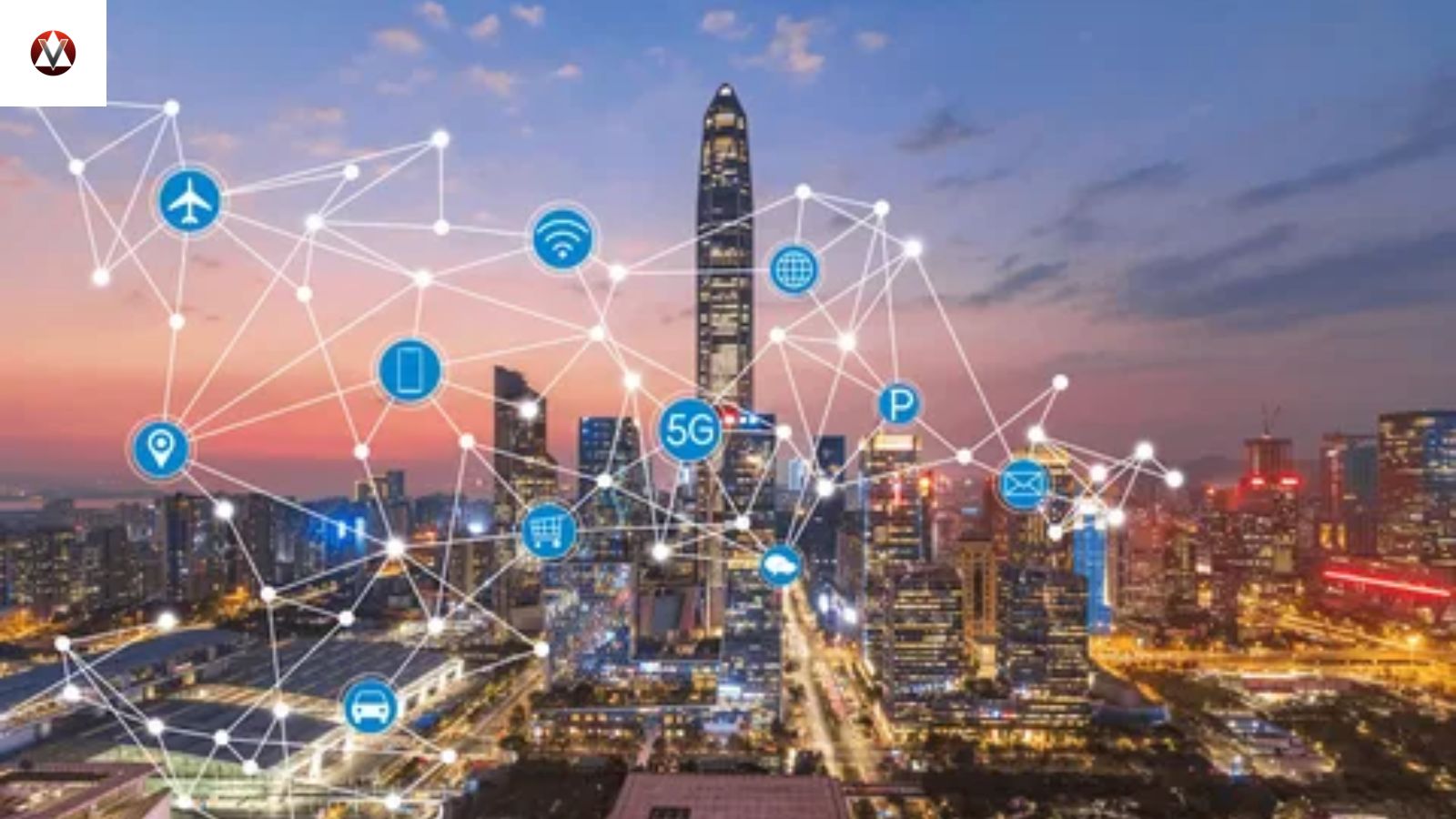
5G enabled smart cities represent the next stage of urban development where digital networks improve how cities operate and serve people. By using high-speed 5G connectivity, cities can connect systems, devices, and services in real time. This allows governments to manage traffic, energy, safety, and healthcare more efficiently.
The main goal is to create cities that are safer, cleaner, and more responsive to citizen needs.
As urban populations grow, traditional networks struggle to handle large data loads. Next-generation wireless networks solve this problem by offering faster speeds, lower delays, and stronger reliability. This makes digital urban infrastructure more intelligent and future-ready.
What Are 5G Enabled Smart Cities
A 5G enabled smart city is an urban area that uses advanced communication technology to improve services and quality of life. These cities rely on connected sensors, smart devices, and data platforms to monitor and manage city operations. Information is collected and analyzed instantly, helping leaders make better decisions.
|See also Artificial intelligence and problem solving
The use of smart city technology allows cities to reduce traffic congestion, improve emergency response, and manage resources wisely. Citizens experience faster services, better safety, and improved connectivity in daily life.
How 5G Technology Powers Smart City Infrastructure
5G technology provides ultra-fast data speeds and extremely low delay, known as low latency communication. This makes real-time applications possible, such as live traffic control and smart surveillance systems. Unlike older networks, 5G can support millions of connected devices at the same time.
With high bandwidth networks, cities can deploy smart cameras, environmental sensors, and connected public systems without performance issues. This creates a strong foundation for intelligent infrastructure and long-term urban growth.
Role of 5G and IoT in Smart City Applications
The combination of 5G and IoT forms the backbone of smart cities. For instance, internet-connected sensors collect data on traffic flow, air quality, energy use, and public safety. Meanwhile, 5G ensures this data is transmitted instantly and reliably.
Moreover, remote device management becomes easier with 5G networks. As a result, city administrators can monitor and control thousands of devices from one location. Consequently, this improves efficiency and reduces maintenance costs across the city.
5G Use Cases in Smart Cities and Civil Services
Smart transportation systems use real-time data to reduce congestion and improve public transit. Traffic lights adjust automatically, and connected vehicles receive live updates. This leads to safer roads and reduced travel time.
Public safety services also benefit from mission-critical communications. Emergency responders use high-speed networks to share video, location data, and medical information instantly. This improves response time and saves lives.
Fixed Wireless, Mobile 5G, and Work-From-Anywhere Connectivity
Fixed wireless access allows cities to deliver fast internet without laying fiber cables. This is especially useful for rural and remote areas. Mobile 5G hotspots support work from anywhere models for city staff and businesses.
Rural business internet becomes more reliable with cellular networks. Backup connectivity through cellular failover ensures services remain online even during network outages.
Network Reliability, SD-WAN, and Mission-Critical Communications
Smart cities require stable and secure networks. SD-WAN technology helps manage multiple connections and improves network performance. It automatically routes data through the best available path.
For emergency services, reliable mobile internet is essential. 5G ensures constant connectivity for police, fire departments, and healthcare teams during critical situations.
Security, Privacy, and Compliance in 5G Smart Cities
With increased connectivity comes, naturally, increased risk. Therefore, data security and privacy are major concerns in smart cities. As a result, governments must protect citizen data from cyber threats and misuse.
Furthermore, compliance with standards like secure network frameworks and encrypted communication ensures trust. In addition, secure cloud environments support safe data storage and controlled access.
Real-World Case Studies of 5G Enabled Smart Cities
Many cities have already adopted 5G smart city solutions. For example, public libraries use mobile connectivity to provide digital access. Similarly, retail and transportation sectors rely on 5G for real-time operations.
As a result, these case studies show how connected city networks improve service delivery, reduce costs, and increase citizen satisfaction. Overall, real deployments prove the value of smart city investments.
Challenges and Limitations of 5G Smart City Deployments
Despite benefits, 5G deployment challenges exist. High infrastructure costs and limited coverage areas can slow adoption. Some regions still rely on older network technologies.
Technical issues such as network integration and device compatibility also require planning. Governments must balance innovation with budget and policy considerations.
Future of 5G Enabled Smart Cities
The future of 5G-enabled smart cities is closely tied to integration with artificial intelligence and edge computing. Moreover, these technologies will enable predictive analytics and automated decision-making.
As a result, as networks evolve, cities will become more adaptive and resilient. Consequently, smart urban ecosystems will support sustainable growth, improved services, and better living standards.
Table: Key Benefits of 5G Enabled Smart Cities
| Feature | Impact on Cities |
|---|---|
| High-speed connectivity | Faster services and data sharing |
| Low latency | Real-time decision making |
| IoT integration | Smarter infrastructure management |
| Secure networks | Improved data protection |
5G-Enabled Smart Cities – Quick Answer
5G-enabled smart cities are urban areas that use 5G networks to connect devices, services, and people in real time. For example, 5G powers traffic management systems, smart lighting, public safety cameras, and autonomous vehicles. It makes cities faster, safer, and more efficient by allowing millions of devices to communicate instantly.
Key Technologies Behind 5G Smart Cities
- Internet of Things (IoT): Millions of connected devices gather data.
- Edge Computing: Processes data close to the source for faster decisions.
- Artificial Intelligence (AI): Analyzes patterns and predicts issues.
- Cloud Platforms: Store and manage vast amounts of urban data.
Together, these technologies create a responsive and intelligent city ecosystem.
Real-World Applications
According to George James Consulting, here are five major use cases:
| Application | Description |
|---|---|
| Vehicle Connectivity | Cars communicate with roads, signals, and each other. |
| IoRT (Robotic Things) | Robots use real-time data for smart automation. |
| Healthcare Monitoring | IoT devices track patient health remotely. |
| Smart Surveillance | Cameras stream live data for public safety. |
| Energy Management | AI optimizes electricity and water usage. |
Benefits of 5G-Enabled Smart Cities
- Efficiency: Faster decision-making and resource allocation.
- Safety: Quicker emergency response and crime detection.
- Sustainability: Smarter energy use and pollution control.
- Mobility: Better traffic flow and public transport systems.
- Inclusivity: Improved access to services for all citizens.
The Origin of 5G-Enabled Smart Cities
The word “smart city” first appeared in the 1990s when technology started being used for urban planning. With the rollout of 5G (fifth-generation mobile networks) in 2019, the concept grew into “5G-enabled smart cities.” Unlike older networks, 5G supports ultra-fast speeds and very low latency. That means cities can use real-time data to improve public transport, energy use, and safety. The phrase simply combines “5G” and “smart city” into one powerful vision of future urban living.
5G-Enabled Smart Cities in Everyday Examples
- Emails: “Our project explores 5G-enabled smart cities for future transport.”
- News Headlines: “5G-enabled smart cities reduce traffic congestion by 40%.”
- Social Media: Companies post updates about new 5G smart poles in downtown areas.
- Formal Writing: Academic journals discuss “5G-enabled smart cities and sustainable development.”
5G-Enabled Smart Cities – Google Trends & Usage Data
Interest in “5G-enabled smart cities” grew after 2020, peaking during major global 5G rollouts. Searches are highest in countries leading in 5G deployment.
| Country | Search Popularity (0–100) | Context |
|---|---|---|
| China | 100 | Massive investment in 5G infrastructure |
| United States | 85 | Focus on autonomous vehicles and smart grids |
| India | 80 | Expansion of urban tech hubs |
| UK | 75 | Smart city policy and digital infrastructure |
| South Korea | 70 | Advanced IoT adoption in public transport |
FAQs
1. What are 5G-enabled smart cities?
Cities that use 5G networks to connect services, devices, and citizens.
2. How does 5G improve smart cities?
It enables faster communication, better traffic control, smart energy use, and improved safety.
3. Which countries are building 5G-enabled smart cities?
China, USA, India, UK, and South Korea lead the way.
4. Can small cities adopt 5G smart systems?
Yes, smaller cities can start with traffic sensors, smart lighting, or connected healthcare.
5. Is 5G safe for smart city use?
Yes, but strong cybersecurity and privacy rules are required.
6. What industries benefit most in 5G smart cities?
Transport, healthcare, energy, and public safety.
7. Will 5G replace Wi-Fi in smart cities?
Not fully. 5G will work alongside Wi-Fi for maximum coverage.
Conclusion
5G-enabled smart cities are not science fiction—they are the next stage of urban life. By using 5G networks, cities can connect transportation, energy, healthcare, and security in real time. The benefits include reduced traffic, cleaner energy use, and safer communities. While spelling differences exist between British and American English, the core concept remains the same worldwide. Businesses, governments, and researchers must work together to make these cities efficient, secure, and people-friendly. For any audience, consistency in spelling and clarity in content ensures trust. The future of urban living will be defined by 5G-enabled smart city.