
What is Evolution of HR Technology?
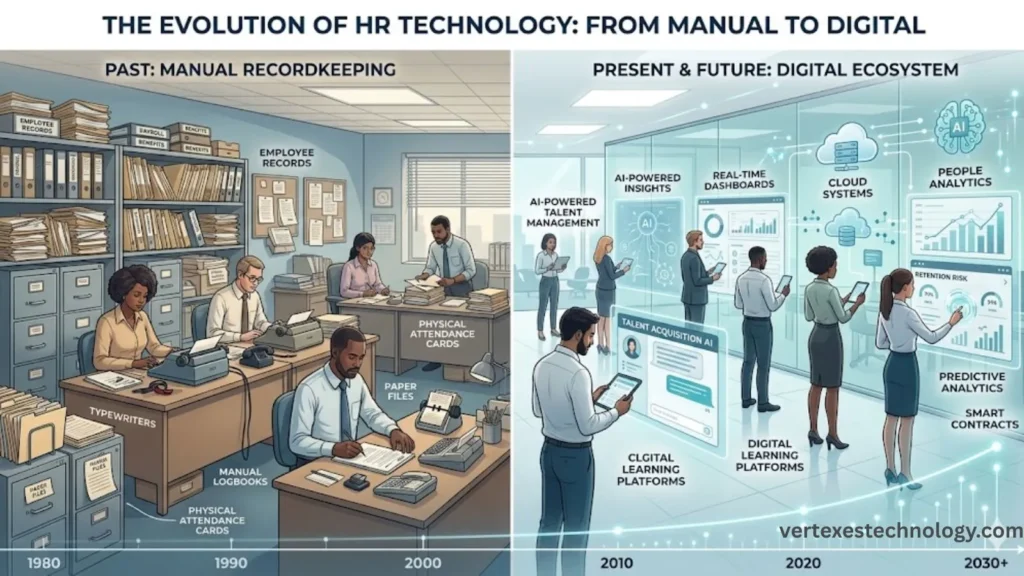
The evolution of HR technology refers to the gradual transformation of human resource processes through digital tools, software, and intelligent systems. It began with paper files and has moved into advanced platforms using AI and automation.
Early HR systems handled simple tasks like payroll. Modern solutions now support recruitment, employee engagement, performance tracking, and data-driven decision-making.
This evolution reflects broader changes in industry, where technology improves efficiency and employee experience.
How Does Evolution of HR Technology Work?
The evolution of HR technology works by integrating new tools into traditional HR processes. Each stage introduces improved systems that replace outdated methods.
Initially, HR relied on manual recordkeeping. Then came basic software for payroll and attendance. Later, cloud-based platforms allowed remote access and real-time updates.
Today, advanced systems use:
- Artificial intelligence for hiring decisions
- Automation for repetitive tasks
- Cybersecurity tools to protect employee data
- Analytics for workforce insights
These technologies work together to streamline operations and reduce human error.
Key Features of Evolution of HR Technology
Modern HR systems offer powerful features shaped by years of development.
Core Features:
- Cloud-Based Platforms: Access HR data anytime, anywhere
- Automation Tools: Handle payroll, attendance, and onboarding
- AI-Powered Recruitment: Screen resumes and match candidates
- Employee Self-Service Portals: Allow staff to manage personal data
- Data Analytics: Provide insights into workforce trends
- Cybersecurity Systems: Protect sensitive employee information
These features highlight how innovation has reshaped HR functions.
Benefits of Evolution of HR Technology
The evolution of HR technology brings clear benefits to organizations and employees alike.
Major Benefits:
- Increased Efficiency: Tasks complete faster with automation
- Better Decision-Making: Data-driven insights guide strategies
- Improved Employee Experience: Easy access to HR services
- Cost Reduction: Less manual work lowers operational expenses
- Enhanced Accuracy: Reduced human error in records
Businesses gain a competitive edge by adopting modern HR solutions.
Real-World Applications of Evolution of HR Technology
The impact of HR technology appears across industries worldwide.
Common Applications:
- Recruitment Platforms: Companies use AI to find top talent
- Performance Management Systems: Track employee growth
- Learning Management Systems (LMS): Offer online training
- Payroll Software: Automates salary processing
- Workforce Planning Tools: Predict staffing needs
Large enterprises and small businesses both benefit from these applications.
Advantages and Disadvantages
Advantages:
- Faster HR processes
- Improved data accuracy
- Better employee engagement
- Scalable systems for growing businesses
Disadvantages:
- High initial setup costs
- Dependence on technology
- Data privacy concerns
- Need for employee training
While the benefits are strong, careful planning helps avoid potential drawbacks.
Is Evolution of HR Technology Safe and Secure?
Yes, modern HR technology systems are designed with strong security measures. However, safety depends on proper implementation.
Technical Security Features:
- Encryption: Protects sensitive employee data
- Access Controls: Limits who can view information
- Cloud Security Protocols: Safeguard remote data storage
- Regular Updates: Fix vulnerabilities in software
Cybersecurity plays a critical role in protecting HR systems. Organizations must follow best practices like secure passwords and regular audits.
Evolution of HR Technology vs Traditional HR Systems
| Feature | Traditional HR Systems | Modern HR Technology |
|---|---|---|
| Data Storage | Paper-based | Cloud-based |
| Efficiency | Slow | Fast and automated |
| Accessibility | Limited | Anytime, anywhere |
| Decision-Making | Manual | Data-driven |
| Security | Basic | Advanced cybersecurity |
| Scalability | Difficult | Highly scalable |
Modern systems clearly outperform traditional methods in speed and flexibility.
Future of Evolution of HR Technology
The future of the evolution of HR technology looks promising. New innovations continue to reshape the workplace.
Emerging Trends:
- AI and Machine Learning: Smarter hiring and predictions
- People Analytics: Deeper workforce insights
- Remote Work Tools: Support global teams
- Blockchain in HR: Secure data verification
- Advanced Automation: Reduce manual tasks further
Organizations that embrace these trends will stay ahead in a competitive market.
Common Problems and Solutions
Problem 1: Resistance to Change
Solution: Provide training and support to employees
Problem 2: Data Security Risks
Solution: Use strong cybersecurity measures and encryption
Problem 3: High Implementation Costs
Solution: Choose scalable solutions based on budget
Problem 4: Integration Issues
Solution: Use compatible software systems
Problem 5: Lack of Technical Skills
Solution: Invest in staff training programs
Addressing these issues ensures smooth adoption of HR technology.
FAQs
1. What is HR technology?
HR technology includes software and tools used to manage employee data, recruitment, payroll, and performance.
2. Why is HR technology important?
It improves efficiency, reduces errors, and enhances employee experience through automation and data insights.
3. How has HR technology evolved?
It has moved from paper-based systems to cloud platforms, AI tools, and advanced analytics.
4. Is HR technology expensive?
Initial costs can be high, but long-term savings often outweigh the investment.
5. Can small businesses use HR technology?
Yes, many affordable solutions are designed for small and medium businesses.
6. What role does AI play in HR?
AI helps in recruitment, data analysis, and automating repetitive tasks.
Final Verdict
The evolution of HR technology has reshaped how organizations manage people. From paper files to intelligent systems, each step brought greater efficiency and insight. Modern tools powered by AI, automation, and cybersecurity now drive HR operations forward.
Businesses that adopt these innovations gain speed, accuracy, and better workforce management. While challenges exist, smart implementation ensures long-term success. The journey of HR technology continues, promising even more advanced solutions in the years ahead.