
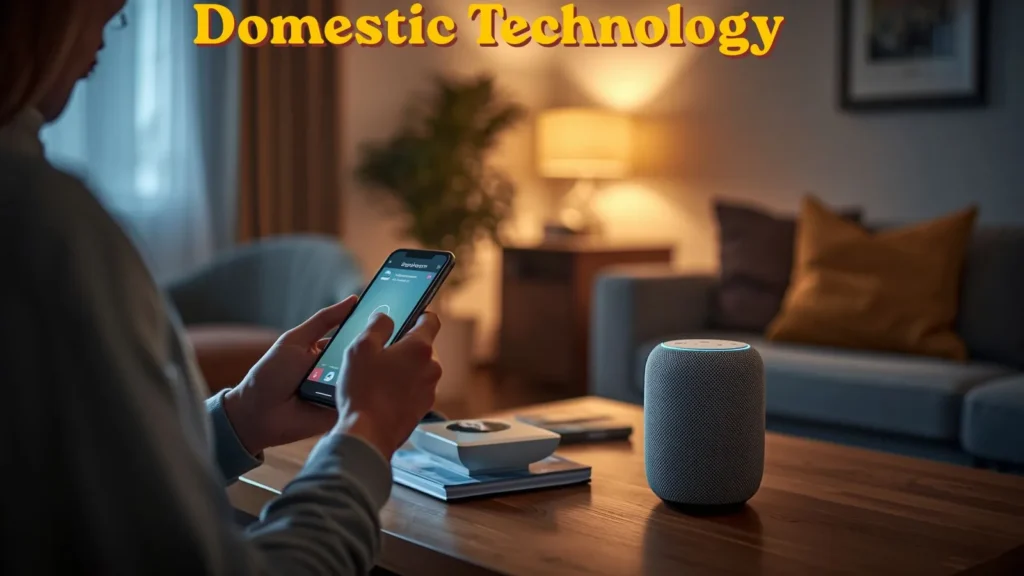
Your home can now think, learn, and act without constant input. Lights adjust on their own. Doors lock themselves. Even your fridge can remind you to buy milk. This shift is not magic—it is domestic technology at work. Many households now rely on smart tools to save time and energy. Yet people still ask: how does it all function, and is it truly safe? Let’s unpack the world of domestic technology in a clear, simple way.
What is Domestic Technology?
Domestic technology refers to devices, systems, and software used inside homes to improve daily life. It blends hardware and software to automate tasks and increase comfort. These tools often rely on artificial intelligence, sensors, and internet connectivity.
Examples include:
- Smart thermostats
- Voice assistants
- Automated lighting systems
- Home security cameras
- Smart kitchen appliances
Domestic technology is part of a larger industry focused on innovation and automation. It aims to reduce human effort while increasing efficiency.
How Does Domestic Technology Work?
Domestic technology works through a mix of hardware devices and software systems. These systems connect through the internet or local networks. Many use cloud computing and AI to learn user behavior.
Here’s a simple breakdown:
Core Components
- Sensors: Detect motion, temperature, or light
- Controllers: Process data and send commands
- Actuators: Perform actions like turning devices on or off
- Software: Manages automation rules and user preferences
Working Process
- Sensors collect data from the environment.
- Software analyzes the information using algorithms.
- The system makes decisions based on patterns.
- Devices respond automatically or via user commands.
For example, a smart thermostat learns your routine. It adjusts temperature without manual input. Over time, it becomes more accurate.
Key Features of Domestic Technology
Domestic technology offers a wide range of features designed for convenience and control.
Smart Connectivity
Devices connect through Wi-Fi or Bluetooth. This allows remote access via mobile apps.
Automation
Tasks happen without manual effort. Lights can turn on at sunset automatically.
Voice Control
Users interact with devices using simple voice commands.
Energy Monitoring
Systems track energy use and suggest ways to save power.
Integration
Multiple devices work together as one system. For instance, security cameras can trigger alarms and lights.
Benefits of Domestic Technology
Domestic technology brings many practical advantages to modern households.
Time Savings
Automation reduces daily chores. Tasks happen faster and with less effort.
Energy Efficiency
Smart systems optimize electricity use. This lowers utility bills over time.
Enhanced Comfort
Homes adjust to personal preferences. Temperature, lighting, and sound adapt easily.
Improved Security
Advanced security systems monitor homes in real time. Alerts notify users instantly.
Accessibility
People with disabilities can control devices easily through voice or apps.
Real-World Applications of Domestic Technology
Domestic technology is already shaping how people live.
Smart Homes
Entire homes operate through connected systems. Lighting, heating, and security work together.
Kitchen Automation
Smart ovens and refrigerators assist with cooking and food storage.
Home Security
Cameras, motion detectors, and smart locks protect homes.
Health Monitoring
Wearable devices and home sensors track health data.
Entertainment Systems
Streaming devices and smart TVs create personalized experiences.
Advantages and Disadvantages
Advantages
- Increased convenience and comfort
- Better energy management
- Enhanced safety features
- Remote access and control
Disadvantages
- High initial cost
- Dependence on internet connectivity
- Privacy concerns
- Complexity for new users
Is Domestic Technology Safe and Secure?
Safety and cybersecurity are key concerns in domestics technology. These systems collect and store personal data. Hackers may target weak networks.
Security Measures
- Use strong passwords for all devices
- Enable two-factor authentication
- Update software regularly
- Secure Wi-Fi networks with encryption
Technical Perspective
Most domestic tech systems use encryption protocols to protect data. However, vulnerabilities still exist. Poor configuration can expose devices to cyber threats.
Manufacturers now focus on cybersecurity. They build systems with better protection layers. Still, users must stay alert and follow best practices.
Domestic Technology vs Traditional Home Systems
| Feature | Domestic Technology | Traditional Systems |
|---|---|---|
| Control | Remote and automated | Manual |
| Efficiency | High | Moderate |
| Cost | Higher upfront | Lower upfront |
| Flexibility | Highly customizable | Limited |
| Maintenance | Software updates needed | Basic upkeep |
Domestic technology offers more control and efficiency. Traditional systems remain simpler but less advanced.
Future of Domestic Technology
The future of domestic tech looks promising. Innovation continues to reshape the industry.
AI Integration
Artificial intelligence will become smarter. Systems will predict needs more accurately.
IoT Expansion
More devices will connect through the Internet of Things. Homes will become fully integrated ecosystems.
Sustainability
Energy-saving solutions will grow. Smart grids and renewable energy systems will play a role.
Voice and Gesture Control
Interaction methods will evolve beyond voice. Gesture-based controls may become common.
Enhanced Cybersecurity
Security systems will improve to counter advanced threats.
Common Problems and Solutions
Connectivity Issues
Problem: Devices lose connection.
Solution: Improve Wi-Fi coverage and reset routers.
Device Compatibility
Problem: Devices do not integrate well.
Solution: Choose products with common standards.
Privacy Concerns
Problem: Data misuse fears.
Solution: Adjust privacy settings and limit data sharing.
High Costs
Problem: Expensive setup.
Solution: Start with essential devices and expand gradually.
FAQs
1. What is domestic technology in simple terms?
Domestic technology includes smart devices and systems that automate household tasks.
2. Is domestic technology expensive?
Initial costs can be high, but long-term savings often balance the expense.
3. Can domestic technology work without the internet?
Some features may work offline, but most require internet connectivity.
4. Is domestic technology secure?
It can be secure if proper cybersecurity measures are followed.
5. What are examples of domestic technology?
Smart lights, thermostats, security cameras, and voice assistants are common examples.
6. Does domestic technology save energy?
Yes, many systems optimize energy use and reduce waste.
Conclusion
Domestic technology is changing how people live at home. It blends innovation, automation, and smart design to create efficient spaces. While it offers clear benefits, users must stay aware of costs and security risks. With proper use, domestic technology can make life easier, safer, and more comfortable. The future promises even smarter homes, driven by AI and advanced systems.