
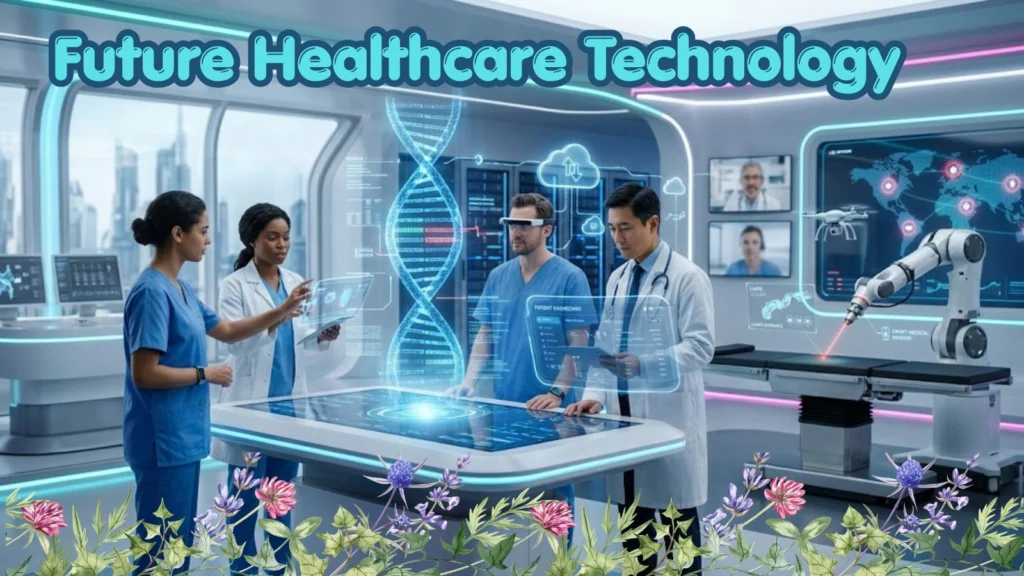
Imagine visiting a doctor who already knows your health condition before you describe your symptoms. Picture a smartwatch warning you about a heart problem days before it becomes dangerous. These ideas once belonged to science fiction. Today, they are becoming reality through future healthcare technology.
Healthcare is changing faster than ever. Hospitals now use artificial intelligence, robotic surgery, telemedicine, and wearable health devices to improve patient care. Scientists continue to develop smarter tools that diagnose diseases earlier and personalize treatments. As technology advances, healthcare becomes more accurate, affordable, and accessible.
Many people search for future healthcare technology because they want to understand how medicine will evolve over the next decade. They also wonder whether these innovations are safe, reliable, and worth trusting. This guide explains everything in simple language. You’ll discover how modern technologies work, their benefits, challenges, real-life applications, and what the future holds for digital healthcare.
See Also: Technologia Meme Explained– The Viral Internet Trend
What is Future Healthcare Technology?
Future healthcare technology refers to advanced medical tools, software, and systems designed to improve healthcare services through innovation.
It combines several modern technologies, including:
- Artificial Intelligence (AI)
- Machine Learning
- Internet of Medical Things (IoMT)
- Telemedicine
- Digital Health
- Wearable Health Technology
- Medical Robotics
- Cloud Healthcare Systems
- Precision Medicine
- Genomic Medicine
- Virtual Reality (VR)
- Augmented Reality (AR)
How Does Future Healthcare Technology Work?
Modern healthcare relies on connected digital systems instead of traditional paper records.
Here’s how the process works:
Data Collection
Smart devices such as fitness trackers, smartwatches, and medical sensors collect health information like:
- Heart rate
- Blood pressure
- Oxygen levels
- Sleep quality
- Blood sugar
AI Analysis
Artificial intelligence analyzes thousands of medical records in seconds. It identifies disease patterns that humans might miss.
Cloud Storage
Patient information is securely stored in cloud-based electronic health records (EHRs). Doctors can access these records from different hospitals.
Smart Decision Support
AI-powered software suggests possible diagnoses and treatment options. Doctors review these recommendations before making final decisions.
Continuous Monitoring
Connected devices send real-time health updates to physicians, allowing early intervention when problems appear.
Key Features of Future Healthcare Technology
Healthcare innovations include many exciting features.
Artificial Intelligence Diagnostics
AI helps detect diseases like cancer, diabetes, and heart conditions much earlier than traditional methods.
Telemedicine Platforms
Patients consult doctors through secure video calls without visiting hospitals.
Remote Patient Monitoring
Wearable devices continuously monitor health and alert healthcare providers during emergencies.
Robotic Surgery
Medical robots assist surgeons with extremely precise operations, reducing recovery time.
Electronic Health Records (EHRs)
Digital records improve communication between hospitals, clinics, and specialists.
Predictive Analytics
Healthcare systems predict disease risks before symptoms appear.
Personalized Medicine
Doctors customize treatments based on a person’s genetic profile and lifestyle.
Smart Medical Devices
Connected inhalers, insulin pumps, and heart monitors automatically share health data with physicians.
Benefits of Future Healthcare Technology
Technology offers major advantages for patients, doctors, and hospitals.
Faster Diagnosis
AI analyzes medical scans quickly, helping doctors identify diseases earlier.
Better Patient Care
Continuous monitoring allows healthcare providers to respond before conditions become serious.
Lower Healthcare Costs
Remote consultations reduce unnecessary hospital visits and transportation expenses.
Improved Accuracy
Advanced software reduces human errors in diagnosis and treatment planning.
Greater Accessibility
People living in remote areas receive expert medical advice through telehealth services.
Personalized Treatments
Healthcare becomes more effective when treatments match each patient’s unique biology.
Faster Recovery
Robotic surgeries involve smaller incisions, causing less pain and shorter hospital stays.
Real-World Applications of Future Healthcare Technology
Many hospitals already use advanced technologies today.
AI Medical Imaging
AI assists radiologists by identifying tumors in X-rays, CT scans, and MRIs.
Smart Hospitals
Hospitals use connected sensors to monitor equipment, patient rooms, and emergency services.
Wearable Health Devices
Smartwatches detect abnormal heart rhythms and notify users immediately.
Virtual Healthcare
Doctors conduct online consultations through secure telemedicine platforms.
Robotic Surgery
Surgeons perform minimally invasive procedures using robotic-assisted systems.
Drug Discovery
AI accelerates pharmaceutical research by identifying promising drug candidates.
Mental Health Support
AI-powered chatbots provide emotional support and monitor mental wellness.
Advantages and Disadvantages
| Advantages | Disadvantages |
|---|---|
| Faster diagnosis | High implementation costs |
| Better patient monitoring | Privacy concerns |
| Improved treatment accuracy | Cybersecurity risks |
| Greater healthcare access | Requires reliable internet |
| Reduced hospital visits | Staff training challenges |
| Personalized medicine | Ethical concerns regarding AI |
Is Future Healthcare Technology Safe and Secure?
Healthcare technology is becoming safer every year. Still, protecting patient information remains essential.
Modern healthcare systems use several security measures:
- Data encryption
- Multi-factor authentication
- Blockchain technology
- Zero Trust Security
- Cloud security platforms
- Regular cybersecurity audits
- HIPAA-compliant data protection (where applicable)
AI systems also undergo continuous testing to reduce bias and improve accuracy.
Even with these protections, hospitals remain attractive targets for cybercriminals. Healthcare organizations must invest in strong cybersecurity infrastructure to protect sensitive patient data.
Future Healthcare Technology vs Traditional Healthcare
| Feature | Future Healthcare Technology | Traditional Healthcare |
|---|---|---|
| Diagnosis | AI-assisted | Manual examination |
| Medical Records | Digital | Paper-based |
| Monitoring | Real-time | Periodic visits |
| Consultation | Telemedicine | In-person only |
| Treatment | Personalized | Standardized |
| Accessibility | Global | Location-dependent |
| Speed | Faster | Slower |
Future of Future Healthcare Technology
Healthcare innovation continues to accelerate.
Several exciting developments are expected over the next decade.
AI Doctors
AI assistants will support physicians during diagnosis and treatment planning.
Digital Twins
Virtual patient models may allow doctors to test treatments before applying them.
Nanotechnology
Tiny medical robots could deliver medicine directly to diseased cells.
3D Bioprinting
Scientists are working toward printing human tissues and organs.
Quantum Computing
Future computers may analyze massive healthcare datasets in seconds.
Gene Editing
Advanced CRISPR technologies may help treat inherited diseases more effectively.
Smart Hospitals
Hospitals will become increasingly automated using robotics, IoT devices, and AI-powered management systems.
Common Problems and Solutions
Data Privacy
Problem: Patient information could be exposed during cyberattacks.
Solution: Strong encryption, blockchain, and cybersecurity monitoring.
High Costs
Problem: Advanced healthcare equipment is expensive.
Solution: Cloud computing and scalable AI platforms reduce operational costs over time.
Technology Adoption
Problem: Medical staff need specialized training.
Solution: Continuous education and simulation-based learning improve adoption.
AI Bias
Problem: AI systems may perform poorly if trained on limited datasets.
Solution: Diverse training data and regular algorithm audits improve fairness.
Internet Connectivity
Problem: Telemedicine depends on reliable internet access.
Solution: Faster broadband and 5G networks improve healthcare accessibility.
Frequently Asked Questions (FAQs)
1. What is future healthcare technology?
Future healthcare technology includes AI, robotics, telemedicine, wearable devices, and digital systems that improve medical care.
2. Will AI replace doctors?
No. AI supports doctors by providing faster analysis, but human medical professionals still make final decisions.
3. Is telemedicine part of future healthcare?
Yes. Telemedicine allows patients to consult healthcare providers remotely using secure digital platforms.
4. What are wearable healthcare devices?
Wearables are smart devices that monitor health data such as heart rate, blood pressure, sleep, and physical activity.
5. Is healthcare technology secure?
Most modern healthcare systems use encryption, cybersecurity tools, and strict access controls to protect patient information.
6. Which technology will have the biggest impact on healthcare?
Experts believe artificial intelligence, precision medicine, robotics, and genomic medicine will shape the future of healthcare.
Final Verdict
Future healthcare technology is transforming medicine in remarkable ways. From AI-powered diagnostics to robotic surgery, these innovations help doctors deliver faster, safer, and more personalized care. Patients also benefit from telemedicine, wearable health devices, and remote monitoring that improve convenience and early disease detection.
Challenges such as cybersecurity, privacy, and implementation costs still exist. Even so, continuous innovation is making healthcare smarter and more accessible. As digital health, machine learning, Internet of Medical Things (IoMT), and precision medicine continue to evolve, the future of healthcare looks more connected, efficient, and patient-centered than ever before.