
Have you ever reheated food only to find it scorching hot around the edges but still cold in the middle? That uneven heating is a common problem with older microwaves. What is microwave inverter technology and why does it solve this issue?
Microwave inverter technology is a modern heating system that delivers continuous and precise cooking power instead of turning the microwave on and off repeatedly. As a result, food cooks more evenly, retains better texture, and preserves more moisture.
See Also; Technologia Meme Explained– The Viral Internet Trend
Microwave Inverter Technology
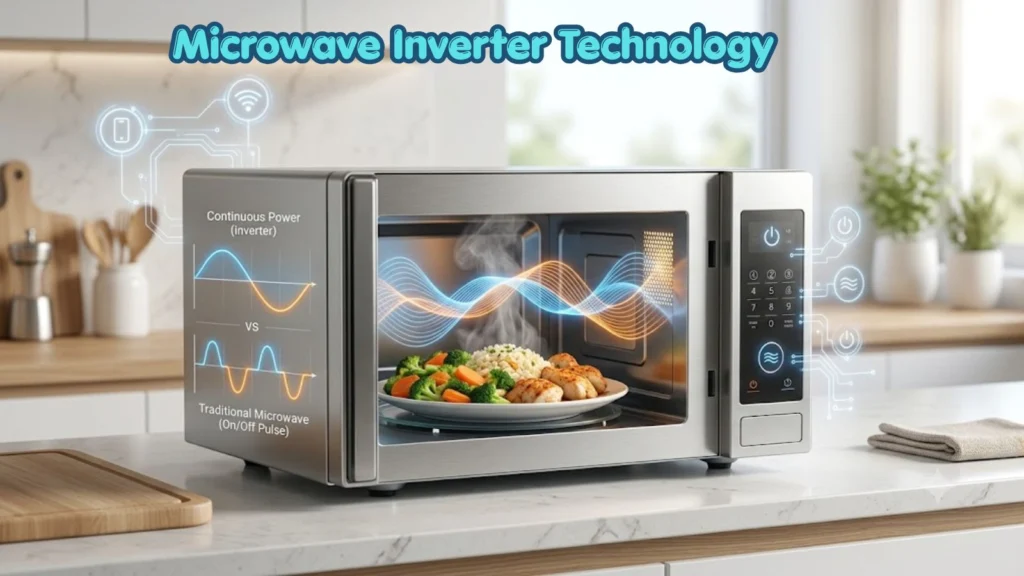
Microwave inverter technology is an advanced power control system used in modern microwave ovens. Unlike traditional models that cycle between full power and no power, inverter technology supplies a steady stream of energy throughout the cooking process.
For example, when you set a traditional microwave to 50% power, it usually alternates between 100% power and zero power. An inverter microwave, however, continuously delivers 50% power. Therefore, food cooks gently and consistently.
This technology relies on an electronic power supply, intelligent electronics, and efficient hardware instead of bulky transformers found in conventional designs.
How Does Microwave Inverter Technology Work?
The system follows a simple yet highly efficient process.
- Electricity enters the microwave.
- The inverter circuit converts electrical power into a controlled output.
- The microwave magnetron receives a constant energy supply.
- Continuous microwave energy heats food evenly.
- Smart controls monitor and adjust power based on the selected cooking level.
Moreover, many premium models combine inverter systems with sensor technology, digital controls, and smart devices for automatic cooking adjustments.
Instead of stopping and restarting repeatedly, the microwave maintains a smooth flow of energy. Consequently, delicate foods cook without becoming dry or overcooked.
Key Features of Microwave Inverter Technology
Continuous Power Delivery
The microwave delivers uninterrupted energy for smoother cooking. This improves texture and reduces overheating.
Precise Temperature Control
Accurate power adjustment helps cook soups, vegetables, and seafood without burning them. Automation also improves consistency.
Faster Defrosting
Frozen meat thaws gradually without partially cooking the edges. Therefore, food remains closer to its original quality.
Better Energy Efficiency
Modern inverter circuits reduce wasted electricity while improving cooking performance. This supports greater energy efficiency and lower power consumption.
Compact Design
Removing the heavy transformer creates more interior cooking space while reducing overall weight.
Smart Cooking Programs
Many models include software, preset menus, and artificial intelligence-inspired sensors that automatically adjust cooking times.
Benefits of Microwave Inverter Technology
Microwave inverter technology offers advantages for many users.
For Individuals
- More even heating
- Better food flavor
- Faster meal preparation
- Less food waste
For Students
- Easy reheating
- Simple controls
- Quick cooking for busy schedules
- Consistent results
In Businesses
- Reliable food quality
- Faster kitchen workflow
- Lower operating costs
- Improved customer satisfaction
For Organizations
- Efficient staff kitchens
- Reduced electricity usage
- Durable performance
- Easier food preparation
Additionally, the technology supports modern innovation, digital transformation, and connected kitchen applications.
Real-World Applications of Microwave Inverter Technology
Microwave inverter technology is useful across many industries.
Education
Schools and universities prepare meals quickly using reliable microwave systems.
Healthcare
Hospitals safely warm patient meals while preserving food quality.
Finance
Office cafeterias improve efficiency during busy lunch hours.
Entertainment
Studios and production teams prepare meals rapidly during long workdays.
Business
Companies use inverter microwaves in employee break rooms for faster meal service.
Manufacturing
Factories provide convenient meal heating for large workforces.
Government
Public offices benefit from dependable cooking equipment with lower maintenance.
Retail
Convenience stores offer better-heated ready-to-eat meals for customers.
Furthermore, many commercial kitchens now integrate these appliances with computer systems, network monitoring, information technology, and data management tools.
Advantages and Disadvantages
| Advantages | Disadvantages |
|---|---|
| Even cooking | Higher purchase price |
| Better defrosting | Repairs may cost more |
| Improved moisture retention | Replacement parts can be expensive |
| Faster cooking | Advanced electronics require skilled service |
| Greater energy efficiency | Premium models cost more |
| More interior space | Not available in every budget model |
Is Microwave Inverter Technology Safe and Secure?
Yes. Modern inverter microwaves are designed with multiple safety systems.
Manufacturers include protective circuits that prevent overheating and electrical faults. Moreover, quality models undergo strict safety testing before reaching consumers.
Although these appliances are not connected to the internet by default, smart models may include mobile devices integration or Wi-Fi features. In those cases, basic cybersecurity practices, software updates, and secure home network settings help protect connected functions.
Safety Tips
- Follow manufacturer instructions.
- Use microwave-safe containers.
- Never operate an empty microwave.
- Clean spills regularly.
- Keep air vents unobstructed.
- Inspect door seals for damage.
Microwave Inverter Technology vs Traditional Microwave
| Feature | Microwave Inverter Technology | Traditional Microwave |
|---|---|---|
| Power Delivery | Continuous | On and off cycling |
| Cooking Quality | More even | Less consistent |
| Speed | Faster overall | Standard |
| Cost | Higher | Lower |
| Ease of Use | Very easy | Easy |
| Scalability | Excellent for home and commercial use | Mostly basic household use |
| Security | Modern electronic protection | Standard safety features |
| Best Use | Precise cooking and defrosting | Basic reheating |
Recommendation: If you cook frequently and want better food quality, inverter technology is usually the better long-term investment.
Future of Microwave Inverter Technology
The future looks promising as kitchen appliances become increasingly intelligent.
Manufacturers continue adding AI, machine learning, cloud computing, and smarter automation features that personalize cooking based on user habits.
Meanwhile, improved cybersecurity, connected digital media, remote monitoring, and advanced technology platforms will allow homeowners to control appliances from anywhere.
Future systems may also analyze cooking patterns using data, connect with other smart devices, and support larger home applications through integrated information technology ecosystems.
As a result, inverter microwaves will likely become even more efficient, intelligent, and user-friendly.
Common Problems and Solutions
| Problem | Solution |
|---|---|
| Uneven cooking | Stir food midway |
| Food remains cold | Use proper power settings |
| Dry food | Cover food while heating |
| Longer cooking time | Avoid overcrowding the dish |
| Strange noises | Check for incorrect cookware |
| Error display | Restart the microwave or consult the manual |
FAQs
1. Is microwave inverter technology better than a regular microwave?
Yes. It provides continuous power, resulting in more even cooking, better defrosting, and improved food texture. Although it costs more initially, many users find the performance worth the investment.
2. Does inverter technology save electricity?
It can improve overall energy efficiency because it delivers power more efficiently and avoids repeated power cycling. Actual savings depend on cooking habits and appliance design.
3. Is inverter technology good for defrosting meat?
Yes. Continuous low-power heating prevents the outer portions from cooking while the center remains frozen. Therefore, meat defrosts more evenly.
4. Can I reheat leftovers with an inverter microwave?
Absolutely. Leftovers heat more uniformly, helping preserve moisture and flavor instead of drying out or overheating certain areas.
5. Are inverter microwaves more expensive?
Generally, yes. However, many users consider the additional cost worthwhile because of improved cooking performance, energy efficiency, and convenience.
6. Do inverter microwaves require special cookware?
No. Standard microwave-safe containers work perfectly. Always avoid metal containers unless your microwave specifically supports them.
7. How long does an inverter microwave last?
With regular cleaning and proper maintenance, a quality inverter microwave can provide many years of dependable service, similar to other premium kitchen appliances.
Conclusion
Understanding what is microwave inverter technology helps you make a smarter buying decision. Unlike traditional microwaves, inverter models provide continuous power that improves cooking consistency, preserves food quality, and increases energy efficiency. Although they often cost more upfront, the improved performance, better defrosting, and enhanced convenience make them an excellent choice for many households and workplaces. If you value evenly cooked meals and modern kitchen technology, an inverter microwave is a worthwhile investment.