
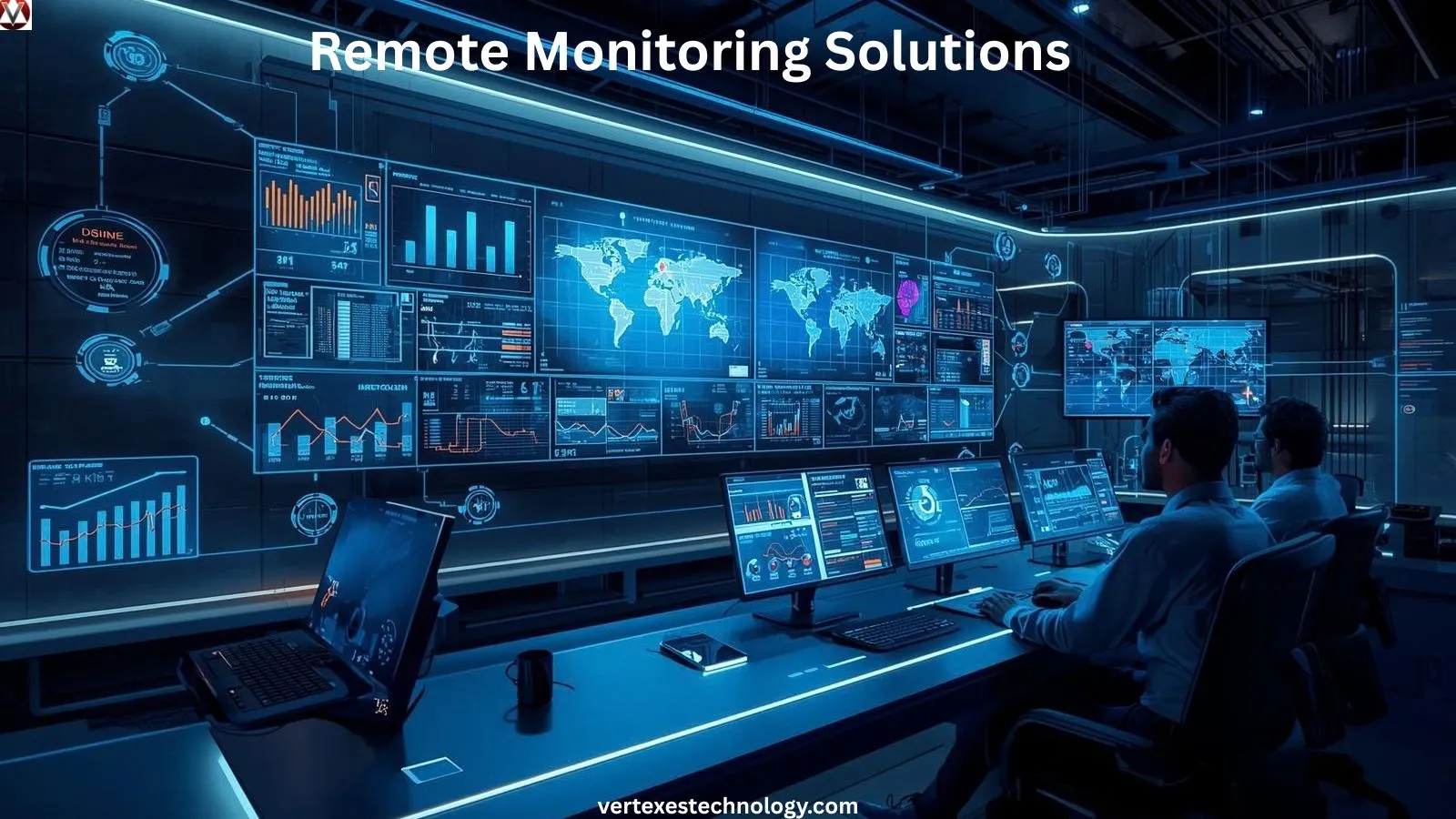
Imagine noticing a machine problem before the gears even complain. That quiet miracle happens daily through Remote Monitoring Solutions. Smart sensors whisper data to cloud dashboards. Meanwhile engineers watch patterns unfold. The result feels almost magical yet the science rests on modern automation and vigilant cybersecurity.
However the real charm lies in foresight. Instead of scrambling during breakdowns companies observe performance continuously. For example a wind farm can detect vibration changes long before blades fail. This early warning saves money protects safety and fuels industry innovation.
RELATED: Technology Industry Insights:
What is Remote Monitoring Solutions?
At its core Remote Monitoring Solutions refers to technology that observes equipment systems or environments from afar. Sensors capture signals. Software interprets them. Then cloud platforms display insights in clear dashboards. In short machines speak through data.
For example hospitals track refrigeration temperature for vaccines. Meanwhile farms measure soil moisture miles away. These systems blend hardware sensors with intelligent software platforms. Together they create constant visibility without standing beside the equipment.
How Does Remote Monitoring Solutions Work?
Curiously the mechanics resemble a nervous system. Sensors act like nerve endings. They detect motion pressure temperature or voltage. Then gateways send that information through networks toward cloud infrastructure.
Inside servers algorithms evaluate incoming data. Artificial intelligence spots anomalies quickly. When danger appears alerts flash on dashboards or mobile apps. Consequently teams react swiftly while AI analytics and industrial automation keep watch day and night.
Key Features of Remote Monitoring Solutions
Below are hallmark capabilities modern platforms usually include:
- Real-time device tracking
- Automated alerts and anomaly detection
- Predictive maintenance analytics
- Secure cloud dashboards
- Integration with IoT hardware and enterprise software
However the standout feature remains predictive insight. Systems interpret patterns rather than simply storing numbers. That subtle difference transforms raw readings into decisions businesses can act upon instantly.
Benefits of Remote Monitoring Solutions
First productivity improves dramatically. Engineers analyze performance from a laptop instead of traveling to distant sites. For instance oil pipelines stretch hundreds of kilometers. Digital monitoring trims inspection trips while strengthening operational efficiency and data-driven management.
Second safety leaps forward. Sensors warn about overheating motors gas leaks or electrical instability. Early signals prevent disasters. Consequently organizations reduce downtime costs while maintaining regulatory compliance across complex industrial technology environments.
Real-World Applications of Remote Monitoring Solutions
Many sectors rely on Remote Monitoring Solutions daily. The diversity may surprise newcomers.
Healthcare
- Monitor medical refrigerators
- Track patient vital devices
Energy
- Observe solar farm performance
- Detect turbine vibration anomalies
Agriculture
- Measure soil humidity
- Automating irrigation decisions
Smart Cities
- Monitor traffic lights
- Track environmental pollution
For example a vineyard may analyze humidity changes hourly. That simple data stream protects grapes from fungal disease while improving harvest yield.
Advantages and Disadvantages
Technology rarely offers pure sunshine. Even brilliant systems carry tradeoffs.
| Advantages | Disadvantages |
|---|---|
| Real-time visibility | Initial setup cost |
| Predictive maintenance | Requires stable internet |
| Lower travel expenses | Skilled staff needed |
| Improved safety alerts | Data privacy concerns |
Nevertheless benefits usually outweigh drawbacks. Organizations that plan infrastructure carefully experience smoother deployment and stronger long-term efficiency.
Is Remote Monitoring Solutions Safe and Secure?
Security sits at the heart of modern monitoring architecture. Data flows through encrypted channels like TLS protocols. Meanwhile identity systems verify every device before it communicates. This layered design forms a strong cybersecurity framework protecting sensitive operational data.
However engineers must maintain updates. Outdated firmware invites attackers like an unlocked gate. Therefore organizations combine network security tools with regular patch management. When maintained properly these systems remain remarkably resilient.
Remote Monitoring Solutions vs IoT Monitoring Systems
Both technologies feel similar yet subtle differences exist.
| Feature | Remote Monitoring Solutions | IoT Monitoring Systems |
|---|---|---|
| Focus | Centralized observation | Device connectivity |
| Analytics | Often advanced predictive models | Basic telemetry analytics |
| Scale | Industrial or enterprise scale | Consumer and small networks |
| Integration | Works with legacy machines | Designed mainly for IoT devices |
Think of it like weather observation. IoT devices act as sensors scattered across land. Meanwhile the monitoring platform resembles a meteorological center interpreting storms.
Future of Remote Monitoring Solutions
The horizon looks bright. Artificial intelligence will sharpen anomaly detection dramatically. Systems may predict equipment failure weeks ahead. Meanwhile edge computing will process information directly at devices which reduces network latency.
Consequently industries move toward autonomous facilities. Machines will self-diagnose issues then schedule maintenance automatically. In that world engineers become strategic overseers rather than emergency troubleshooters.
Common Problems and Solutions
Problem: Sensor data overload
Solution: Deploy AI filtering algorithms that highlight abnormal patterns.
Mistake: Weak connectivity in remote areas
Solution: Use satellite networks or low-power wide-area technologies.
Problem: Security vulnerabilities
Solution: Implement zero-trust architecture and frequent firmware updates.
Problem: Complex integration with legacy systems
Solution: Introduce middleware APIs that translate between old and new protocols.
FAQs
What industries use remote monitoring technology?
Energy healthcare agriculture manufacturing logistics and smart infrastructure rely heavily on digital monitoring tools.
Does it require constant internet access?
Most platforms need connectivity though edge computing can temporarily store data until connection resumes.
Can small businesses afford monitoring systems?
Yes. Cloud-based subscriptions allow gradual scaling without major hardware investments.
Do these systems use artificial intelligence?
Many modern platforms apply AI algorithms to predict faults and analyze operational trends.
How accurate are sensor readings?
High-quality industrial sensors often maintain accuracy above 99 percent with proper calibration.
Is technical expertise required?
Basic training helps. However modern dashboards simplify configuration through visual interfaces.
Final Verdict / Conclusion
Technology often promises convenience yet delivers complexity. Monitoring platforms break that pattern. They quietly transform scattered machines into communicative systems. Sensors gather whispers of data. Algorithms translate those whispers into meaningful guidance.
In practical terms the benefits feel tangible. Companies reduce downtime protect workers and uncover hidden operational insights. Moreover scalable cloud architecture allows businesses of any size to adopt monitoring gradually.
Picture a lighthouse along a rugged coast. It does not steer ships directly. Instead it reveals danger before collision occurs. Monitoring platforms serve a similar role across factories farms hospitals and energy grids.
Organizations that embrace this technology today gain a strategic advantage tomorrow. Insight arrives sooner decisions sharpen faster and risks shrink quietly in the background. That subtle shift marks the true power of modern monitoring innovation.