
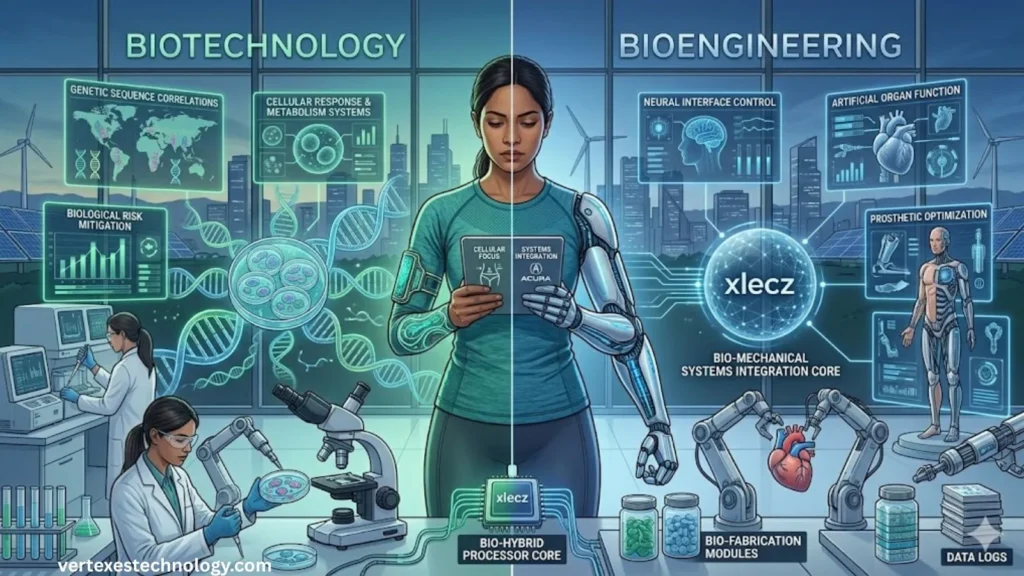
What if you could grow medicine inside living cells or design machines that mimic life itself? That is the strange and exciting world of biotechnology vs bioengineering. These two fields shape modern science, yet many people mix them up. Both drive innovation in healthcare, agriculture, and industry. Still, they follow different paths and use different tools. Understanding their contrast can help students, professionals, and curious minds see where science is heading next.
|RELATED: B2B Technology Public Relations
What is Biotechnology vs Bioengineering?
Biotechnology vs bioengineering refers to the comparison between two related but distinct scientific fields. Biotechnology focuses on using living organisms, cells, or biological systems to create useful products. It often deals with natural processes and modifies them for human benefit.
What is Biotechnology:
Biotechnology uses living organisms or cells to create useful products like medicines or food.
Example: Making insulin using genetically modified bacteria.
What is Bioengineering:
Bioengineering applies engineering principles to design tools and systems for biological use.
Example: Creating artificial limbs or designing medical imaging devices.
In simple terms:
- Biotechnology = using life
- Bioengineering = designing solutions for life
Both fields overlap in many areas, yet their approaches differ.
Which has more scope: biotechnology or biomedical engineering
Biotechnology offers strong scope in pharmaceuticals, agriculture, and environmental science. Biomedical engineering grows fast in healthcare technology and devices. Scope depends on region and skills, but both fields show rising demand, especially with AI integration and modern industry innovation.
Biomedical engineering vs biotechnology vs bioinformatics
Biomedical engineering designs medical devices and healthcare systems. Biotechnology focuses on biological processes and product development. Bioinformatics uses software and data analysis to study biological data. Each field supports innovation, combining biology with technology, AI, and automation in different ways.
Biotechnology and biomedical engineering impact factor
Biotechnology has a high impact in pharmaceuticals, agriculture, and sustainability. Biomedical engineering strongly impacts healthcare through devices and diagnostics. Both fields drive global innovation, improving quality of life while supporting industry growth, research advancements, and emerging technologies like AI and automation.
Biomedical engineering vs bioengineering
Biomedical engineering focuses specifically on healthcare applications like medical devices and imaging systems. Bioengineering is broader, covering all engineering applications in biology, including agriculture and environmental systems. Both fields overlap, yet biomedical engineering remains more specialized within healthcare technology.
How Does Biotechnology vs Bioengineering Work?
Biotechnology works by manipulating biological systems at the cellular or molecular level. Scientists may alter DNA, grow microbes, or use enzymes to produce drugs, food, or fuel. This process often relies on lab techniques and biological research.
Bioengineering works differently. It uses engineering methods like modeling, automation, and system design. Engineers may create medical devices, prosthetics, or synthetic tissues. They often use software tools, AI systems, and advanced machinery.
Key processes include:
- Genetic modification and cell culture (biotechnology)
- Device design and system integration (bioengineering)
- Data analysis using AI and automation tools
Both fields rely on innovation, yet their workflows feel distinct.
Key Features of Biotechnology vs Bioengineering
Biotechnology Features
- Uses living organisms and biological systems
- Focuses on natural processes and molecular biology
- Strong link to pharmaceuticals and agriculture
- Requires lab-based experimentation
Bioengineering Features
- Combines biology with engineering design
- Uses hardware and software solutions
- Includes robotics, AI, and automation
- Focuses on system efficiency and scalability
These features highlight how biotechnology vs bioengineering differ in practice.
Benefits of Biotechnology vs Bioengineering
Biotechnology offers many advantages. It helps produce vaccines, improve crops, and develop eco-friendly solutions. It supports sustainability and reduces reliance on harmful chemicals.
Bioengineering brings its own benefits. It enables the creation of advanced medical devices, artificial organs, and smart diagnostic tools. It improves healthcare precision and efficiency.
Shared benefits include:
- Faster innovation in the industry
- Better healthcare outcomes
- Increased use of AI and automation
- Improved environmental solutions
Both fields contribute to global progress in unique ways.
Real-World Applications of Biotechnology vs Bioengineering
Biotechnology vs bioengineering plays a vital role in daily life. You may not notice it, yet it shapes many industries.
Biotechnology Applications
- Vaccine and drug development
- Genetically modified crops
- Biofuels and renewable energy
- Waste treatment using microbes
Bioengineering Applications
- Artificial organs and prosthetics
- Medical imaging devices
- Wearable health technology
- Robotics in surgery
These applications show how both fields drive innovation across sectors.
Advantages and Disadvantages
Advantages
- Encourages scientific breakthroughs
- Supports healthcare and agriculture
- Drives industry innovation
- Integrates AI and cybersecurity tools
Disadvantages
- High research and development costs
- Ethical concerns in genetic modification
- Complex regulatory requirements
- Risk of misuse or security issues
Biotechnology vs bioengineering both offer value, yet they also raise challenges.
Is Biotechnology vs Bioengineering Safe and Secure?
Safety and security depend on how these fields are used. Biotechnology may involve genetic editing, which raises ethical and safety concerns. Strict regulations help control risks in labs and production systems.
Bioengineering often involves software, hardware, and connected devices. This introduces cybersecurity risks. Medical devices connected to networks may face hacking threats. Strong encryption and secure systems reduce these dangers.
Technical safety measures include:
- Controlled lab environments
- Data protection and encryption
- AI monitoring systems
- Regulatory compliance standards
Both fields require careful oversight to remain safe and secure.
Biotechnology vs Bioengineering
Here is a clear comparison table:
| Feature | Biotechnology | Bioengineering |
|---|---|---|
| Focus | Living organisms | Engineering solutions for biology |
| Tools | Cells, DNA, enzymes | Software, hardware, AI |
| Approach | Biological processes | Engineering design |
| Industry Use | Pharma, agriculture | Healthcare devices, robotics |
| Innovation Style | Natural system modification | System creation and optimization |
This comparison makes biotechnology vs bioengineering easier to understand.
Future of Biotechnology vs Bioengineering
The future looks bold and dynamic. Biotechnology will continue to advance gene editing and personalized medicine. New therapies may cure diseases once thought untreatable.
Bioengineering will push boundaries in robotics, AI, and automation. Smart implants and advanced prosthetics may become common. Integration with cybersecurity systems will also grow stronger.
Future trends include:
- AI-driven biological research
- Automated lab systems
- Smart medical devices
- Sustainable industrial solutions
Biotechnology vs bioengineering will likely merge even more over time.
Common Problems and Solutions
Problem: High Costs
Research and development can be expensive.
Solution: Increase funding and use automation to reduce costs.
Problem: Ethical Concerns
Genetic modification raises moral questions.
Solution: Follow strict guidelines and global standards.
Problem: Security Risks
Connected devices may face cyber threats.
Solution: Implement strong cybersecurity systems.
Problem: Skill Gap
Experts need knowledge in both biology and engineering.
Solution: Promote interdisciplinary education and training.
FAQs
1. What is the main difference in biotechnology vs bioengineering?
Biotechnology uses living systems, while bioengineering designs solutions using engineering principles.
|See also: Assure technology
2. Which field is better for healthcare?
Both are valuable. Biotechnology develops drugs, while bioengineering creates medical devices.
3. Is biotechnology safer than bioengineering?
Both have risks. Safety depends on regulation and proper use.
4. Can AI be used in both fields?
Yes, AI supports research, automation, and data analysis in both areas.
5. Which field has better career opportunities?
Both offer strong career paths in healthcare, industry, and research.
6. Do biotechnology and bioengineering overlap?
Yes, they often work together in advanced scientific projects.
Final Verdict
Biotechnology vs bioengineering may sound similar, yet they follow different paths. One harnesses the power of living systems, while the other builds solutions using engineering design. Both fields drive innovation, shape industries, and improve lives. Their overlap creates exciting possibilities for the future. As technology evolves, their combined impact will only grow stronger.