
Blockchain technology is one of the most searched and discussed innovations in the digital world. Why? Because it promises transparency, security, and decentralization—three things every business and government needs.
Typically, people search for this keyword to understand how blockchain works, where it’s used, and why it matters beyond cryptocurrency.To help with that, this article breaks down blockchain technology in simple terms, then explores its applications, and finally highlights the trends shaping its future.
Next, let’s look at how blockchain technology powers cryptocurrency.
What is Blockchain Technology in Cryptocurrency?
Blockchain technology serves as the foundation of cryptocurrency. Specifically, it works as a digital ledger that records every transaction in secure, linked “blocks.” Furthermore, each block connects to the previous one, forming a chain that cannot be changed.
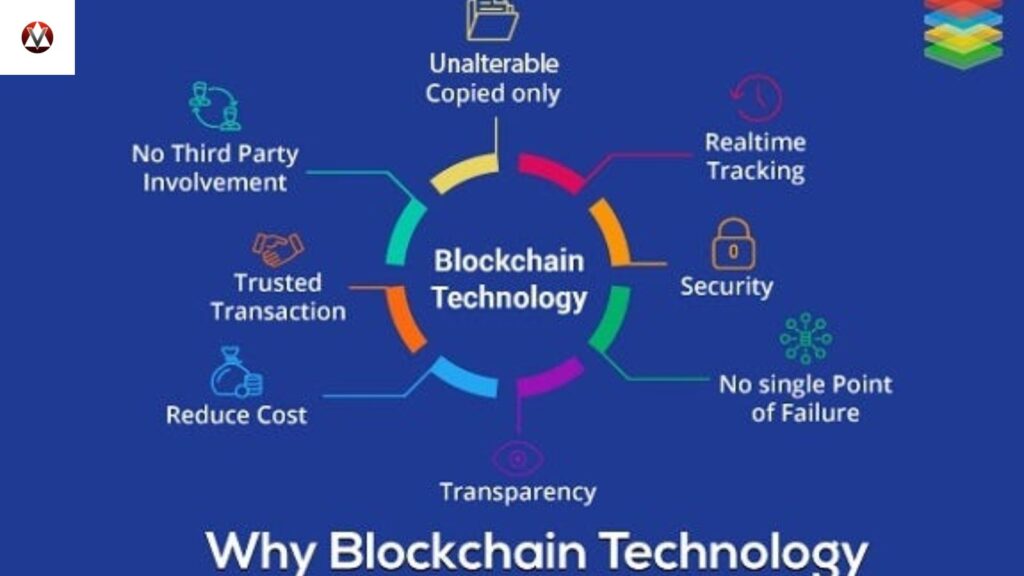
In cryptocurrency, blockchain ensures:
- Transparency: Everyone can see the transaction history.
- Security: Data is encrypted and almost impossible to tamper with.
- Decentralization: No single authority controls it—computers worldwide maintain the system.
How Blockchain Powers Cryptocurrencies

Stablecoins (e.g., USDT, USDC): Blockchain ensures fast, low-cost global transfers.
Bitcoin (BTC): The first cryptocurrency built on blockchain (2009).
Ethereum (ETH): Uses blockchain for both currency and smart contracts.
What is Blockchain Technology and How Does it Work?
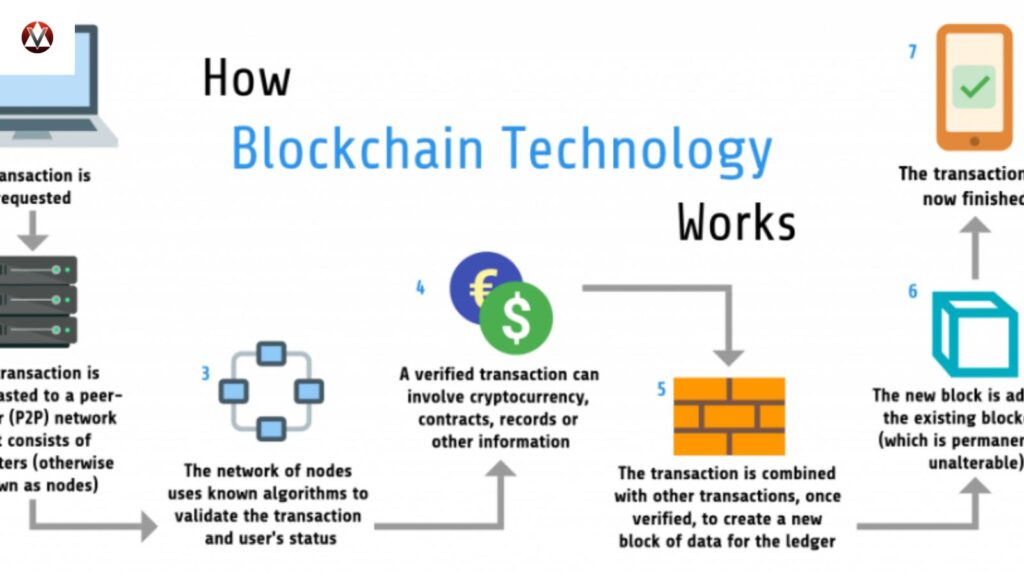
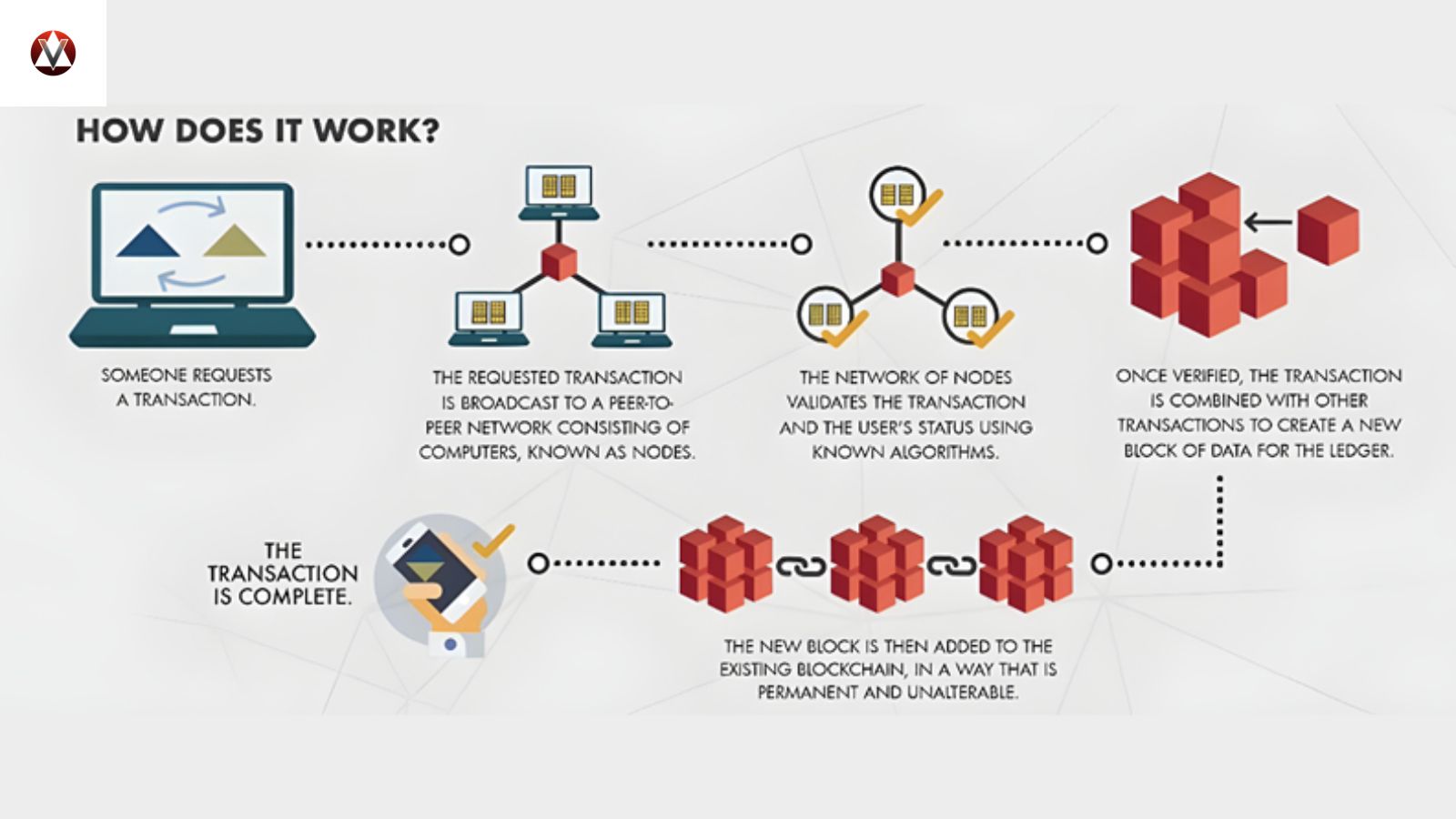
Blockchain technology is a digital ledger system that records data or transactions securely across many computers. Instead of storing the information in one place (like a bank database), systems share it across the network, which makes it transparent, decentralized, and hard to tamper with.
Blockchain Technology Examples
1. Bitcoin (BTC)
- The first and most famous use of blockchain.
- Every Bitcoin transaction is recorded on a public blockchain.
- No bank controls it; the network of users verifies transactions.
🔹 2. Ethereum (ETH)
- Goes beyond money.
- Supports smart contracts → digital agreements automatically execute when users meet the required conditions.
- Used for NFTs, decentralized apps (DApps), and DeFi (Decentralized Finance).
🔹 3. Supply Chain Tracking
- For instance, companies like Walmart and Maersk use blockchain to track goods
- As a result, you can see where your mangoes were grown and how they reached the store.
🔹 4. Healthcare
- In practice, patient records are stored securely on blockchain.
- As a result, doctors and hospitals can access data without risking leaks.
🔹 5. Voting Systems
- Blockchain-based digital voting is transparent and tamper-proof.
- Helps prevent election fraud.
🔹 6. Banking & Payments
- Ripple (XRP) uses blockchain for instant, low-cost international money transfers.
- Faster than traditional bank wires.
Blockchain Technology – Quick Answer
Blockchain technology is a digital system for recording transactions in a secure, transparent, and tamper-proof way. Instead of one central database, data is stored across many computers. For example, cryptocurrencies like Bitcoin use blockchain to track ownership, while businesses apply it in supply chains, banking, and healthcare to ensure trust and accuracy.
The Origin of Blockchain Technology
The word “blockchain” comes from two words: block (a digital record) and chain (a linked sequence). Initially, the concept appeared in a 2008 whitepaper by Satoshi Nakamoto, who introduced Bitcoin. Soon after, the first blockchain launched in 2009 as part of the Bitcoin network. Since then, the technology has grown beyond cryptocurrency, expanding into finance, logistics, healthcare, and even voting systems.. Unlike other tech terms, “blockchain” has the same spelling worldwide, so confusion is minimal.
British English vs American English Spelling
The phrase “blockchain technology” does not have spelling differences. But related technical words do:
| UK English | US English | Example in Blockchain |
|---|---|---|
| Decentralisation | Decentralization | “Blockchain ensures decentralisation/decentralization of power.” |
| Licence | License | “Smart contracts work under licence/license rules.” |
| Organisation | Organization | “A global organisation/organization adopted blockchain.” |
Which Spelling Should You Use?
- US Audience: Use American spelling (organization, decentralization).
- UK/Commonwealth Audience: Stick to British spelling (organisation, decentralisation).
- For a global audience, American spelling is more common in blockchain whitepapers, reports, and global publications.
Common Mistakes with Blockchain Technology
- Confusing blockchain with Bitcoin → Bitcoin uses blockchain, but blockchain has many other uses.
- Many people think blockchain is fully anonymous, but it actually offers transparency, and others can sometimes trace identities.
- Mixing spelling styles → Using “organisation” and “organization” together lowers clarity.
- Believing blockchain cannot be hacked → While very secure, weak apps built on blockchain can be attacked.
Blockchain Technology in Everyday Examples
- Email Example: “Moreover, our company is currently testing blockchain technology to improve supply chain tracking and transparency.”
- News Headlines: “Consequently, blockchain technology transforms global payments.”
- Social Media: Startups post about blockchain projects for healthcare or voting.
- Formal Writing: Additionally, research papers highlight “blockchain technology in financial security.”
Blockchain Technology – Google Trends & Usage Data
Google Trends shows strong growth in searches for “blockchain technology” since 2017. The peak came during the cryptocurrency boom, but interest remains high in finance, supply chain, and government sectors.
| Country | Search Popularity (0–100) | Key Context |
|---|---|---|
| United States | 100 | Crypto, fintech, supply chain |
| India | 90 | Banking, startups, IT services |
| UK | 85 | Finance, government policy |
| Singapore | 80 | Fintech hub, blockchain research |
| Germany | 70 | Industry 4.0, smart contracts |
Comparison Table: Keyword Variations
| Variation | Usage Context |
|---|---|
| Blockchain technology | Most common in formal writing |
| Blockchain tech | Short form, blogs, social media |
| Distributed ledger technology (DLT) | Academic and technical reports |
| Blockchain systems | Used in IT and software fields |
FAQs About Blockchain Technology
1. What is blockchain technology in simple words?
As a result, blockchain is a secure digital system that records transactions in linked blocks.
2. Is blockchain only for cryptocurrencies?
No, people also use it in banking, healthcare, logistics, and government.
3. Why is blockchain called secure?
Because systems decentralize and encrypt data, they make tampering difficult.
4. What are the main benefits of blockchain?
Transparency, security, decentralization, and efficiency.
5. Can blockchain be hacked?
It’s very secure, but apps built on it may have weaknesses.
6. Which industries use blockchain technology?
Finance, supply chain, real estate, healthcare, and voting systems.
7. What is the future of blockchain?
Integration into smart cities, global finance, and digital identity systems.
Conclusion
Blockchain technology is more than a buzzword—it is a foundation for the future of digital trust. Originally born from Bitcoin, blockchain has since expanded into finance, healthcare, supply chains, and beyond. Moreover, its decentralized nature ensures security, transparency, and efficiency, ultimately making it one of the most transformative technologies of the 21st century. While spelling differences exist in related words between British and American English, the term “blockchain” remains universal. BusinTherefore, businesses, governments, and individuals should understand its power, avoid common mistakes, and adopt blockchain where it creates real value. Looking ahead, the future will be driven by blockchain technology.